Time is the one resource we can’t get back. Whether you’re a student juggling assignments, a professional managing endless emails, or an entrepreneur running multiple projects, the struggle is the same: too much to do, too little time. That’s where AI-powered automation tools come into play.
These aren’t futuristic fantasies anymore—they’re real, accessible, and designed to make your life easier. From writing assistants that polish your emails in seconds to AI schedulers that plan your meetings without lifting a finger, smart automation is here to help you save hours every single week.
Why Work Harder When AI Can Work Smarter?
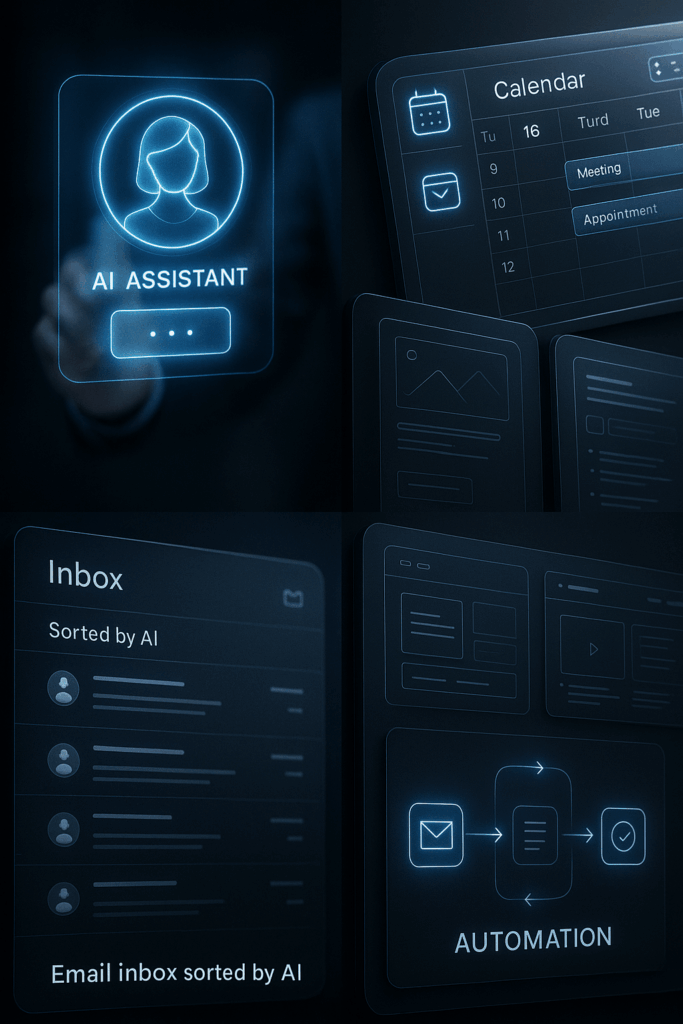
In this article, we’ll explore five powerful AI tools that are changing the way people work. The tone is casual, easy to follow, and full of real-life examples so you can see exactly how these tools could fit into your daily routine.
1. AI Writing Assistants: From Blank Page to Polished Draft
Say Goodbye to Writer’s Block
We’ve all been there—staring at a blinking cursor, struggling to find the right words. AI writing assistants like GrammarlyGO, Jasper, or ChatGPT can help you brainstorm ideas, draft full articles, or fine-tune your tone for different audiences.
Example in Action
Imagine you’re a marketer who needs to create three blog posts a week. Instead of spending 4–5 hours writing each draft, you can generate a solid outline and first draft in less than 30 minutes. That’s a time savings of over 10 hours per week.
Why It Matters
By automating the first 70% of the writing process, these tools let you focus on strategy, creativity, and final polish—things that machines can’t replicate as well as you.
2. AI Scheduling and Calendar Management
The End of Back-and-Forth Emails
Scheduling a meeting used to mean an endless chain of “Does this time work for you?” AI schedulers like Calendly, x.ai, and Motion automate this process by syncing with your calendar and offering time slots to others instantly.
Storytelling Example
Picture this: You’re running a small consulting business and need to meet five different clients in one week. Instead of 20–30 emails, you send each client a booking link. They choose their time, and your calendar updates automatically.
Data Point
A study by Doodle found that professionals waste up to 5 hours per week just scheduling meetings. AI scheduling tools can cut that number to almost zero.
3. AI Email Management: Inbox Zero Made Easy
Smart Filtering and Prioritization
Your inbox is a battlefield. Between spam, newsletters, and urgent client emails, it’s easy to drown in unread messages. Tools like Superhuman, Gmail Smart Compose, and Sanebox use AI to prioritize important messages, draft quick replies, and snooze less urgent emails.
Example in Action
A startup founder receives 200+ emails daily. With AI filtering, only the top 20% (urgent investor notes, client requests, and team updates) land in the main inbox. The rest get automatically sorted into folders for later review.
Why It Matters
Instead of spending 2–3 hours a day managing emails, you only need 30–40 minutes. That’s a savings of more than 10 hours per week.
4. AI Design and Presentation Tools
Professional Visuals Without the Learning Curve
Designing graphics, slide decks, or social media posts used to mean hiring a designer—or spending hours struggling with Photoshop. Now, AI design tools like Canva’s Magic Design, Beautiful.ai, and DALL·E can generate layouts, suggest templates, and even create custom visuals from simple prompts.
Storytelling Example
Imagine preparing for a pitch meeting. Instead of hiring a designer for $500 and waiting three days, you type your ideas into an AI design tool. In less than an hour, you have a polished, professional deck ready to impress investors.
Data Point
According to Venngage, 65% of marketers say visuals are essential for communication. With AI, creating those visuals no longer eats up your time or budget.
5. AI Task Automation Platforms
Connect the Dots Between Apps
Tools like Zapier, Make (formerly Integromat), and Microsoft Power Automate act as your personal digital assistant, linking different apps together. Think of it as glue that automates repetitive tasks—without needing to write a single line of code.
Example in Action
Say you run an online store. With AI automation, every time a customer places an order:
- The details go to your CRM,
- A confirmation email is sent,
- Your inventory is updated,
- And a Slack notification goes to your sales team.
All of this happens automatically, saving you countless manual clicks.
Why It Matters
According to Zapier’s own research, businesses that adopt automation save an average of 10–20 hours per employee per week. That’s like giving your team an extra part-time worker—for free.
Additional Insights: The Compounding Effect of AI
Here’s the kicker: the more of these tools you stack, the greater the time savings. It’s not just about saving 2 hours here or 5 hours there—it’s about compounding time savings across your entire workflow.
- Combine AI writing assistants + design tools = content creation in half the time.
- Use AI schedulers + email management = clear calendar and inbox with minimal effort.
- Add automation platforms = a fully streamlined work ecosystem.
Over a year, these time savings can add up to hundreds of hours—enough to launch a new project, learn a new skill, or simply spend more time with family.
Conclusion: Work Less, Achieve More
The future of productivity isn’t about working harder—it’s about working smarter with AI. By adopting AI-powered tools for writing, scheduling, email management, design, and automation, you’re not just shaving minutes off your tasks; you’re transforming the way you work.
Whether you’re an entrepreneur looking to scale, a professional trying to balance work and life, or simply someone who hates wasting time on repetitive tasks, these tools can be life-changing.
Call to Action
The next step is simple: pick one AI tool from this list and test it in your daily routine. Watch how much time you save in a single week. Once you see the impact, layer in more tools to build your own AI-powered productivity system.
