Artificial Intelligence (AI) is revolutionizing businesses across every industry, from healthcare to finance, retail to manufacturing. With its power to analyze data, automate processes, and enhance customer experiences, it’s no wonder that AI is seen as a game-changer. However, as AI becomes increasingly integrated into business operations, the need for ethical considerations has never been more important.
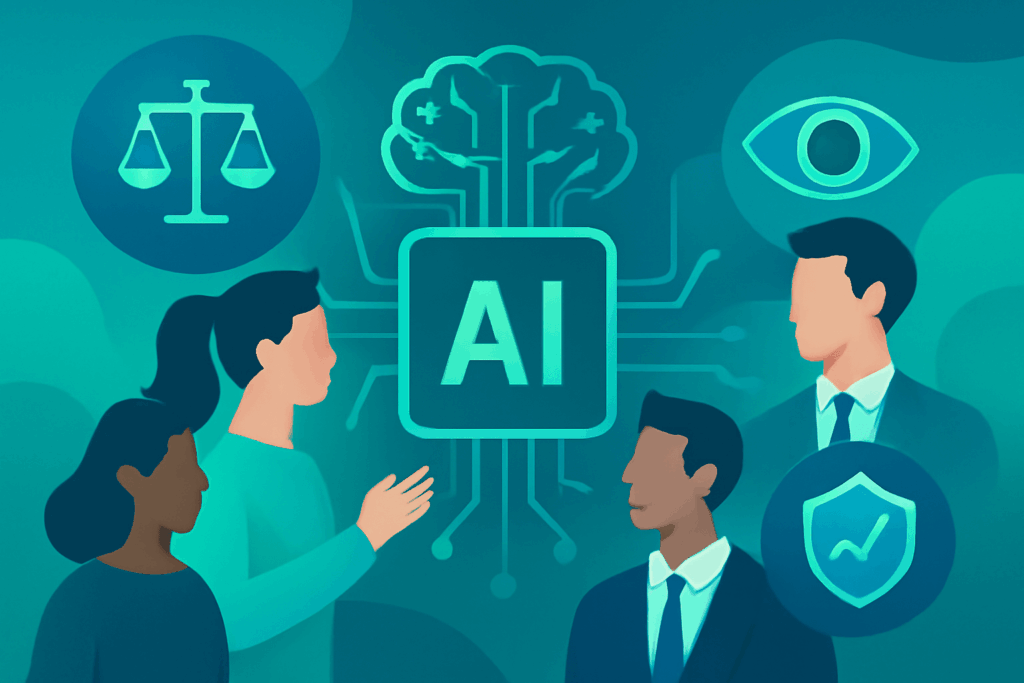
In this article, we’ll explore five key principles for implementing ethical AI in your business, ensuring that your AI systems are not only effective but also responsible, transparent, and aligned with societal values.
1. Prioritize Transparency and Explainability
Why Transparency Matters
Transparency in AI refers to the ability to understand and explain how an AI system makes decisions. This is crucial, especially as AI systems are used to make decisions that affect people’s lives, such as loan approvals, hiring, and healthcare diagnostics.
Building Trust with Stakeholders
Being transparent about how AI models work and the data they use helps build trust among your stakeholders—employees, customers, and regulators. When people can understand how decisions are made, they’re more likely to accept the results.
Example: AI in Healthcare
Consider an AI system used to diagnose diseases. If the AI gives a recommendation without being explainable, doctors and patients may not trust the diagnosis. But with explainable AI, where the model can show the reasoning behind its decision (e.g., “This patient has symptoms X, Y, and Z, which match the profile of Disease A”), trust and acceptance are greatly improved.
2. Ensure Fairness and Avoid Bias
What is Bias in AI?
AI models learn from historical data, and if that data is biased, the AI system may unintentionally perpetuate these biases. This can lead to unfair outcomes, such as discriminatory hiring practices or unequal treatment of certain customer groups.
Eliminating Bias
To implement ethical AI, businesses must focus on eliminating biases from data and algorithms. This involves ensuring that the data used to train AI models is diverse, representative, and free from discrimination.
Example: AI in Recruitment
In the recruitment industry, AI is often used to screen resumes. If the data used to train the AI includes a historical bias (e.g., favoring male candidates over female candidates), the AI may unknowingly reinforce that bias. By ensuring that the training data is balanced and free from such biases, companies can use AI for hiring in a fair and unbiased way.
3. Promote Accountability and Responsibility
Who is Responsible for AI Decisions?
AI systems are ultimately created and managed by humans. Therefore, businesses must establish clear lines of accountability for the decisions made by AI. If an AI system makes an error or a biased decision, the company must take responsibility for its impact.
Setting Clear Accountability Structures
Create a framework that outlines who in your organization is responsible for overseeing the ethical implications of AI and who will be held accountable for its outcomes. This might involve appointing an AI ethics officer or forming an ethics review board.
Example: Autonomous Vehicles
In the case of self-driving cars, if an AI system makes a decision that leads to an accident, who is held responsible? Clear guidelines and accountability mechanisms must be in place to ensure that AI technologies are used safely and responsibly.
4. Safeguard Privacy and Data Protection
Data Privacy in the Age of AI
AI systems thrive on data, and businesses are collecting more data than ever before. However, this data often includes personal and sensitive information, making data privacy a significant ethical concern.
Protecting User Privacy
To implement ethical AI, businesses must ensure that they are complying with data privacy laws (such as GDPR) and that they are safeguarding user data from misuse or breaches. Implement privacy-by-design principles to ensure that privacy considerations are integrated into the AI system from the outset.
Example: AI in Marketing
Many companies use AI to target customers with personalized advertisements. However, using personal data without consent or transparency can lead to privacy violations. By using anonymized data and giving customers control over their data, businesses can implement AI ethically in marketing while respecting privacy.
5. Foster Continuous Monitoring and Improvement
AI is Not a Set-It-and-Forget-It Solution
AI systems require continuous monitoring to ensure they remain ethical and effective. Regular audits, updates, and reviews are essential to ensure that AI is functioning as intended and that it continues to align with ethical guidelines.
Evolving with New Challenges
As AI technology advances, new ethical challenges may emerge. It’s important to stay updated on these issues and adapt your AI systems accordingly. Establish mechanisms for monitoring the AI’s performance and collecting feedback from users to ensure that the system evolves in line with societal values and business needs.
Example: AI in Customer Service
Many businesses use AI-powered chatbots to handle customer inquiries. These chatbots need to be constantly monitored and refined to ensure they provide accurate, helpful, and unbiased responses. Regularly updating the bot’s knowledge base and refining its responses helps ensure that it continues to serve customers ethically.
Conclusion: Ethical AI is a Competitive Advantage
Implementing ethical AI in your business isn’t just the right thing to do—it’s a competitive advantage. By prioritizing transparency, fairness, accountability, privacy, and continuous improvement, you can build AI systems that are not only effective but also trusted by your customers and stakeholders.
As AI continues to play a more significant role in business, those who approach it responsibly will stand out as leaders in their industries. Start by assessing your current AI practices and make improvements based on these five principles. By doing so, you’ll ensure that your business stays ahead of the curve while upholding ethical standards that foster trust and loyalty.
Call to Action: Ready to integrate ethical AI into your business? Start by reviewing your AI systems and ensuring they align with these principles. Reach out to us for expert advice on implementing responsible AI solutions today!
