Imagine a world where companies no longer waste hours in endless meetings debating what action to take. Instead, AI tools analyze data, predict outcomes, and offer recommendations within seconds. This is not science fiction—it’s happening now. AI-driven decision making is quickly becoming the backbone of modern workplaces, guiding everything from marketing campaigns to hiring strategies.
Why AI-Driven Decisions Are Redefining the Future
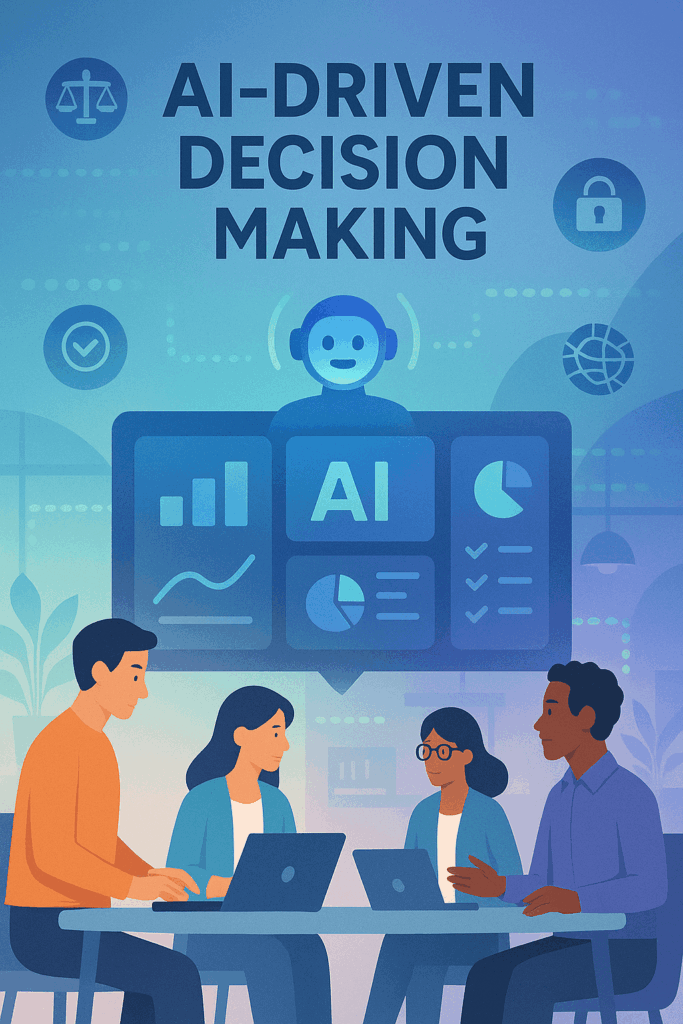
But what are the key trends shaping this revolution? Let’s dive into nine you need to know.
1. Predictive Analytics Becomes a Business Standard
Instead of reacting to market shifts, organizations are learning to anticipate them. Predictive analytics uses historical data and machine learning to forecast customer behavior, supply chain needs, and even employee turnover.
Example in Action
Netflix famously leverages predictive models to recommend content. The same approach is now applied in finance, healthcare, and retail to optimize decisions before problems arise.
2. AI-Powered Personalization at Scale
Gone are the days of one-size-fits-all. Companies are using AI to deliver personalized experiences, whether that’s a product recommendation, a marketing message, or even a career development plan for employees.
Why It Matters
- Boosts customer loyalty.
- Increases conversion rates.
- Creates more meaningful workplace engagement.
3. Ethical AI and Responsible Decision Making
As AI takes a bigger role in decision making, ethical concerns are rising. Bias in algorithms can create unfair hiring practices or discriminatory lending decisions. Businesses are now investing in ethical AI frameworks to ensure transparency and accountability.
Data Point
A Deloitte survey found that 62% of executives consider ethical AI a top priority in 2025, compared to just 33% two years earlier.
4. AI in Hiring and HR Decisions
Recruitment and talent management are being reshaped by AI. Tools now screen resumes, match candidates with job descriptions, and even predict cultural fit.
Storytelling Example
A fast-growing startup reduced its hiring time by 40% after adopting an AI-driven recruitment platform, freeing HR teams to focus on human-centered tasks like interviews and onboarding.
5. Real-Time Data for Faster Decision Making
Traditional reports are outdated the moment they’re published. AI systems now process live data streams, enabling managers to make quick, evidence-based decisions in real time.
Quick Tip
Companies using AI dashboards for real-time decision support report up to 25% higher operational efficiency compared to those relying on static reports.
6. AI Enhancing Risk Management
From detecting fraud to forecasting supply chain disruptions, AI is becoming indispensable for risk analysis. These tools help businesses proactively mitigate threats before they spiral out of control.
Example
Banks use AI algorithms to spot unusual transaction patterns, saving billions in potential fraud losses annually.
7. Collaboration Between Humans and AI (“Augmented Intelligence”)
The future isn’t about AI replacing humans—it’s about AI working alongside us. Known as augmented intelligence, this trend emphasizes decision support rather than full automation.
Why It Works
- Humans bring empathy and context.
- AI contributes speed and accuracy.
- Together, they make more balanced decisions.
8. AI-Powered Scenario Planning
Instead of guessing “what might happen,” businesses now run hundreds of AI-powered simulations to test different scenarios. From global market shifts to new product launches, leaders gain clarity before committing resources.
Example
Retailers used scenario planning tools during the pandemic to anticipate supply chain bottlenecks, helping them adapt faster than competitors.
9. Democratization of AI Tools for Everyday Teams
AI is no longer reserved for data scientists. Platforms like ChatGPT, Jasper, and Tableau are putting AI-driven insights directly into the hands of marketing, sales, and HR teams.
Storytelling Example
A small e-commerce team with no data science background boosted their sales by 30% simply by using an AI-driven analytics dashboard to identify customer purchase trends.
Q&A: Common Questions About AI-Driven Decision Making
Q: Will AI replace managers in the workplace?
Not entirely. While AI automates data-heavy tasks, human judgment and leadership remain essential.
Q: Are AI-driven decisions always accurate?
AI decisions are only as strong as the data behind them. Garbage in, garbage out—clean data is critical.
Q: How can small businesses adopt AI-driven decision making?
Start with accessible tools like AI chatbots, predictive analytics software, or AI-driven CRM platforms. Many now offer affordable entry-level plans.
Conclusion: The Future Belongs to AI-Assisted Thinkers
The rise of AI-driven decision making is not just about technology—it’s about empowering people to make smarter, faster, and more ethical choices. From predictive analytics to real-time dashboards, the trends shaping the future of work promise to make organizations more resilient and innovative.
Call to Action: Whether you’re a business leader or an individual professional, the question is no longer if you’ll use AI in decision making—it’s how. Start small, stay curious, and embrace these trends to stay ahead in the future of work.
