The buzz around machine learning (ML) isn’t slowing down anytime soon—and for good reason. Businesses worldwide are leveraging ML to predict customer behavior, streamline workflows, cut costs, and make smarter decisions. Yet, many companies still see ML as a “tech luxury” rather than an operational necessity.
Why Machine Learning Matters for Modern Business
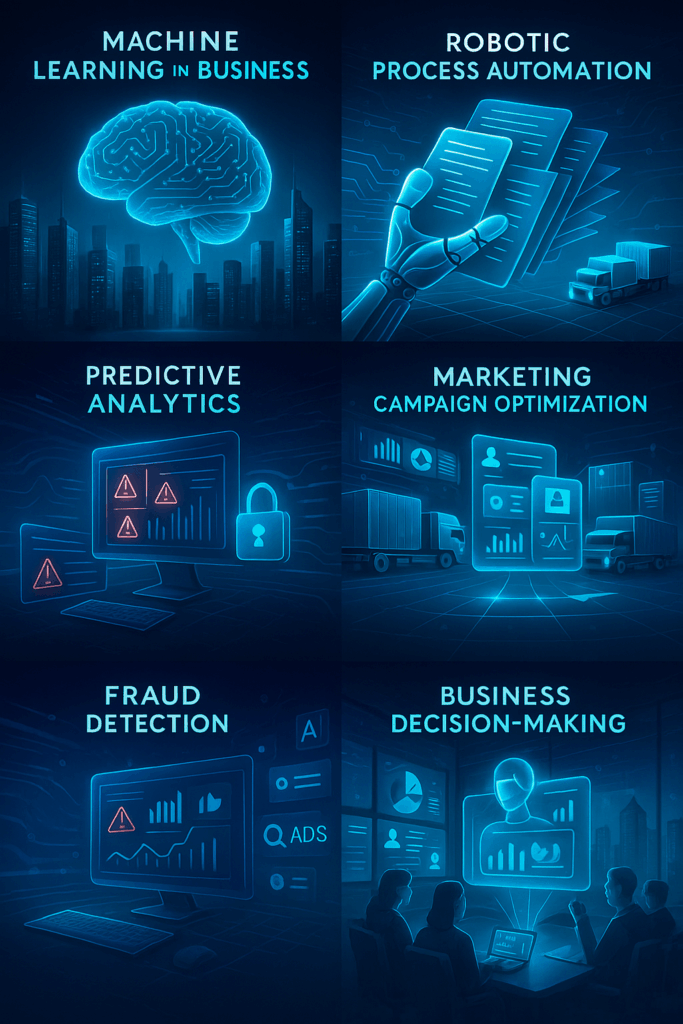
The truth? In 2025, machine learning is less about science fiction and more about survival. If your competitors are harnessing it and you’re not, you may be leaving money, time, and growth opportunities on the table. Let’s dive into eight proven strategies that show how machine learning can practically and powerfully transform your business operations.
1. Automating Repetitive Tasks
H3: Freeing Teams from Mundane Work
Data entry, invoice processing, and routine approvals often eat up valuable hours. With ML-powered automation, these repetitive tasks can be handled quickly, accurately, and without fatigue.
- Example: A logistics company used ML-driven robotic process automation (RPA) to handle thousands of shipping documents daily. Result: 40% time savings and fewer human errors.
- Tip: Start small by automating one task, like invoice scanning, and scale gradually.
2. Enhancing Customer Experience with Predictive Analytics
H3: Understanding What Customers Want Before They Ask
Machine learning excels at spotting patterns in customer behavior. By analyzing browsing history, purchase data, and interactions, businesses can personalize recommendations and improve satisfaction.
- Storytelling: Think about Netflix. Its recommendation engine uses ML to keep viewers hooked with personalized content, contributing to millions of viewing hours daily.
- Action Step: Apply similar ML models to suggest products in e-commerce or offer personalized services in banking and hospitality.
3. Smarter Supply Chain Management
H3: From Forecasting to Real-Time Adjustments
Supply chains are complex, and even small inefficiencies can snowball into major issues. ML algorithms can predict demand fluctuations, optimize inventory, and even reroute shipments during disruptions.
- Data Point: McKinsey reports that businesses adopting ML for supply chain forecasting cut errors by up to 50%.
- Example: A global retailer reduced stockouts by 35% using predictive demand planning powered by ML.
4. Fraud Detection and Risk Management
H3: Spotting Red Flags in Real Time
Fraud costs businesses billions annually. Machine learning can detect unusual patterns, such as suspicious transactions or account activity, much faster than traditional methods.
- Example: Banks leverage ML-driven anomaly detection systems to block fraudulent credit card activity within seconds.
- Quick Tip: Integrate ML with real-time monitoring dashboards to act immediately on suspicious behavior.
5. Optimizing Marketing Campaigns
H3: From Guesswork to Data-Driven Decisions
No more guessing what works. ML analyzes customer data to predict which campaigns will resonate, what channels perform best, and when to reach audiences.
- Storytelling: A startup ran two ad campaigns—one traditional, one ML-optimized. The ML-driven campaign delivered 25% higher conversions and lower cost per lead.
- H4: Tools to Explore
- Google AI for Ads
- Salesforce Einstein
- Adobe Sensei
6. Boosting HR and Talent Management
H3: Smarter Hiring and Retention
Recruitment often feels like finding a needle in a haystack. ML can screen resumes, predict candidate fit, and even flag employees at risk of leaving.
- Example: An HR platform using ML reduced employee churn by 20% through predictive attrition modeling.
- Tip: Use ML to identify patterns in top performers and replicate those traits in hiring strategies.
7. Improving Product Quality with Predictive Maintenance
H3: Avoiding Costly Downtime
For manufacturers, downtime is expensive. ML predicts equipment failures before they happen, allowing proactive maintenance.
- Data Point: Predictive maintenance can reduce maintenance costs by up to 30% and unplanned outages by 50%.
- Example: An airline used ML to predict engine wear, preventing delays and saving millions annually.
8. Driving Smarter Decision-Making with Data Insights
H3: Turning Big Data into Actionable Strategy
Raw data is useless without insights. Machine learning transforms massive datasets into clear, actionable business strategies.
- Storytelling: A retail chain used ML to analyze customer purchase histories, optimizing store layouts. Result: a 15% increase in sales in just three months.
- Action Step: Pair ML insights with human judgment for the best outcomes—machines find patterns, humans apply context.
Q&A: Common Questions About ML in Business
Q: Is machine learning too expensive for small businesses?
A: Not necessarily. Cloud-based ML tools now offer pay-as-you-go pricing, making it accessible even for startups.
Q: Do we need a team of data scientists to start with ML?
A: No. Many platforms provide pre-built ML models that don’t require coding expertise. You can start small and scale as you grow.
Q: What’s the biggest barrier to adopting ML?
A: Often, it’s not the technology—it’s company culture. Shifting toward data-driven decision-making requires buy-in from leadership and teams.
Conclusion: The Future of Business Runs on Machine Learning
Machine learning is no longer a futuristic buzzword. It’s a practical toolkit reshaping how businesses operate today. From automating tasks to predicting market trends, the eight strategies outlined here can unlock efficiency, reduce costs, and strengthen competitiveness.
Call to Action:
If you’re serious about future-proofing your business, start integrating ML into your operations today. Begin with one area—like customer experience or predictive maintenance—and build momentum from there. Remember: the earlier you embrace machine learning, the faster you’ll outpace your competition.
