The supply chain is the backbone of the global economy. From raw materials reaching factories to finished goods arriving at your doorstep, every step relies on a complex network of people, processes, and technology. In 2025, this backbone is getting a massive upgrade—thanks to Artificial Intelligence (AI).
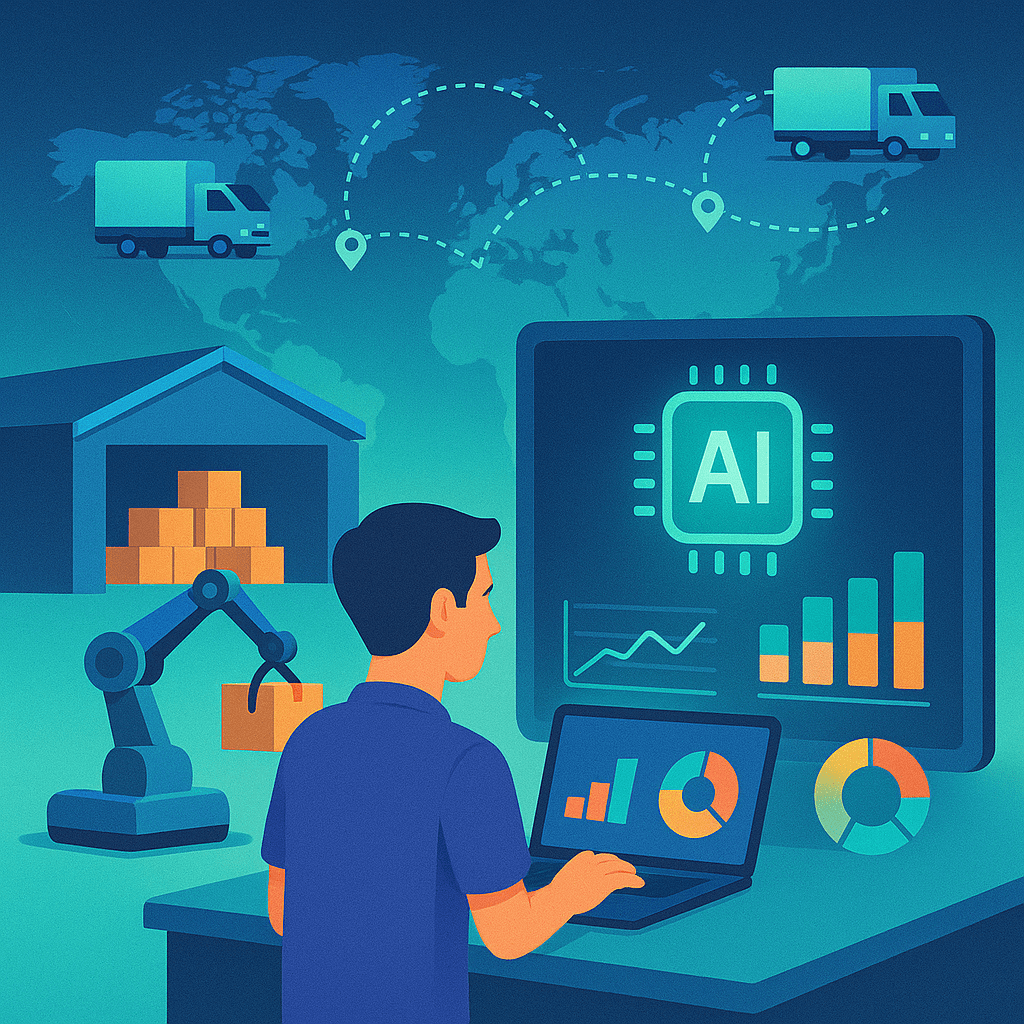
AI is no longer just a buzzword; it’s a practical tool that’s reshaping how businesses manage logistics, inventory, and customer expectations. Companies that embrace AI are experiencing faster decision-making, reduced waste, and smarter distribution models. But what exactly does this transformation look like? Let’s dive into the 7 powerful ways AI is revolutionizing supply chain management in 2025.
1. Predictive Demand Forecasting
Accurate forecasting has always been a challenge. In the past, companies relied heavily on historical sales data and seasonal trends, which often led to overstocking or stockouts.
How AI Changes the Game
AI-powered forecasting uses real-time data from multiple sources—weather patterns, consumer behavior, social media signals, and even economic indicators—to predict demand with remarkable accuracy.
Example
For instance, a major retailer in Europe used AI forecasting models during the 2024 holiday season and reduced excess stock by 18% while increasing on-time deliveries.
2. Smarter Inventory Management
Traditional inventory systems often struggle to balance supply with fluctuating demand. Overstock means wasted resources, while understock leads to missed sales.
AI in Action
AI tools continuously analyze inventory levels, lead times, and supplier reliability. This helps companies automatically reorder items before they run out and reduce unnecessary warehouse costs.
Example
Amazon has been a leader in this field, using AI-driven robotics and algorithms to streamline inventory flow across massive fulfillment centers.
3. Enhanced Route Optimization
Logistics is not just about moving goods—it’s about moving them as efficiently as possible.
Why It Matters
Fuel prices, traffic conditions, and delivery windows all impact cost and customer satisfaction.
AI’s Role
AI-driven route optimization platforms evaluate real-time traffic, weather, and delivery schedules to recommend the fastest and most fuel-efficient paths.
Example
A logistics provider in Asia integrated AI route optimization and cut delivery times by 25%, while lowering fuel consumption by 15%.
4. Supply Chain Risk Management
Global supply chains face constant risks—from political instability to natural disasters.
How AI Helps
AI can analyze vast amounts of data from global news feeds, trade reports, and even satellite imagery to identify potential disruptions before they occur.
Example
During the 2023 global shipping crisis, companies using AI-based risk detection rerouted shipments weeks earlier than competitors, avoiding costly delays.
5. Robotics and Automation in Warehousing
Warehouses are evolving into high-tech hubs where machines work alongside humans.
The AI Impact
Robotic arms and automated guided vehicles (AGVs) powered by AI are speeding up picking, packing, and sorting tasks. AI ensures that these robots learn from human behavior and continuously improve their efficiency.
Example
Walmart reported a 30% increase in order fulfillment speed after implementing AI-driven robotic systems across multiple distribution centers.
6. Sustainable Supply Chain Practices
Sustainability is not just a trend—it’s becoming a requirement.
AI’s Contribution
AI optimizes packaging, reduces waste, and minimizes carbon footprints by improving transportation routes and energy use.
Example
A global fashion brand integrated AI-driven sustainability models and achieved a 20% reduction in carbon emissions across its supply chain.
7. Personalized Customer Experiences
Supply chain isn’t only about logistics—it’s about customer satisfaction.
How AI Personalizes the Journey
AI tools can analyze customer buying patterns and create tailored delivery experiences. For example, predicting when a customer is likely to reorder and suggesting convenient delivery options.
Example
Grocery delivery apps powered by AI can suggest replenishments before you run out, ensuring you never miss essentials like milk or bread.
Real-World Storytelling: From Chaos to Control
In 2024, a mid-sized electronics company struggled with constant shipping delays and rising costs. After adopting an AI-driven supply chain management system, they reduced backorders by 40%, cut logistics costs by 22%, and significantly improved customer reviews. Their story highlights how even non-global giants can benefit from adopting AI solutions.
Q&A: Common Questions About AI in Supply Chain
Q: Is AI too expensive for small businesses?
Not anymore. Cloud-based AI solutions now offer scalable packages that small and medium businesses can afford.
Q: Can AI completely replace human decision-making?
No. AI is a powerful tool, but human expertise is still essential, especially for strategic decisions.
Q: How secure is AI in supply chains?
Most AI tools are built with advanced cybersecurity protocols. However, companies must also implement strong data privacy and protection policies.
Conclusion
Artificial Intelligence is not a futuristic dream—it’s the present reality reshaping how goods are produced, stored, and delivered worldwide. From smarter inventory management to eco-friendly logistics, AI is proving to be the secret weapon of successful businesses in 2025.
Call to Action:
If you’re in logistics, retail, or manufacturing, now is the time to explore AI-powered supply chain tools. Start small—test forecasting models, try route optimization software, or adopt AI-driven warehouse automation. The earlier you integrate these technologies, the faster you’ll stay ahead of competitors.
