Artificial Intelligence is no longer just a buzzword. It’s driving decisions, shaping customer experiences, and transforming entire industries. But with great power comes great responsibility. While AI can automate and accelerate operations, it also poses real risks—bias, privacy invasion, lack of transparency, and even reputational damage.
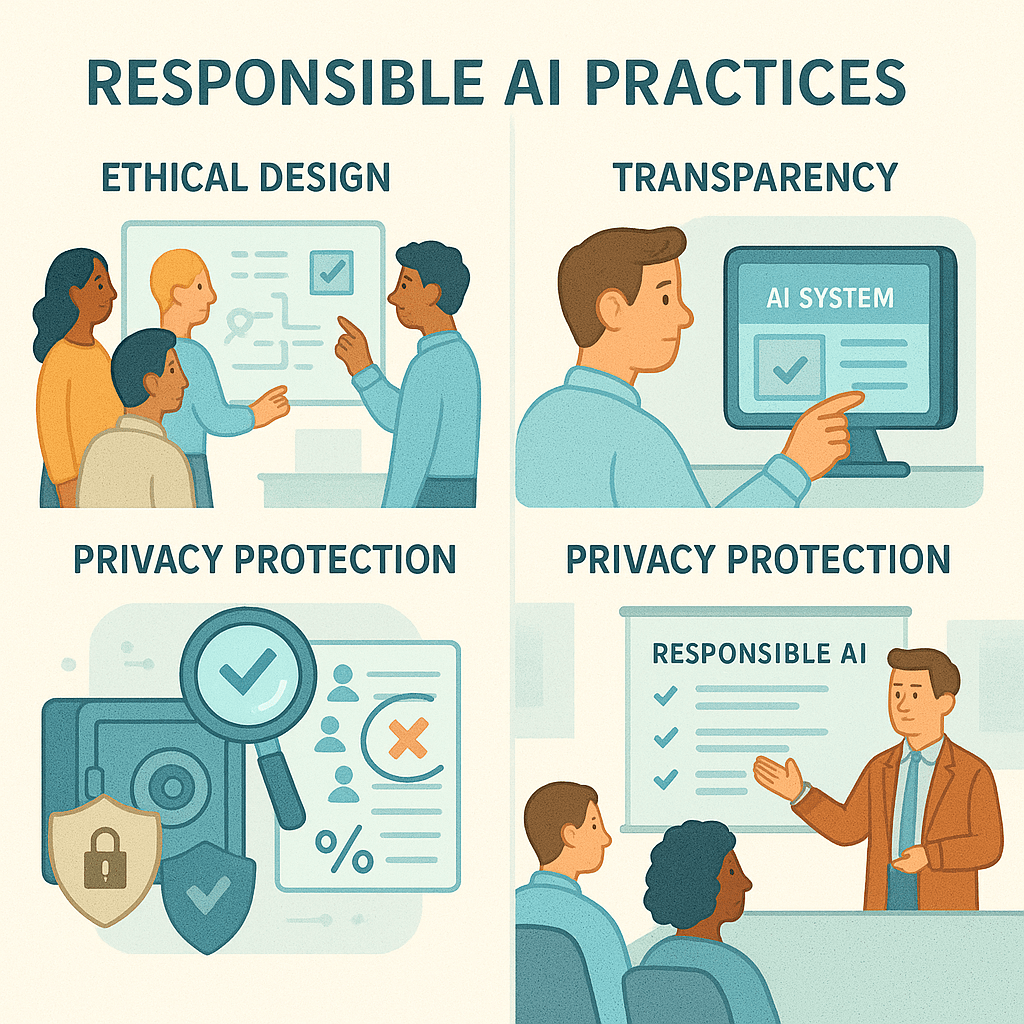
So, how can your business harness the power of AI responsibly? Let’s dive into five key practices that not only protect your company but also build long-term trust with customers, partners, and regulators.
1. Start with Ethical Design Thinking
Why It Matters
Many AI failures can be traced back to poor design decisions early in development. When businesses fail to consider the ethical implications of their algorithms, it can lead to unintended consequences—like biased hiring tools or unfair credit scoring.
What You Can Do
- Involve diverse teams during the planning phase (tech, legal, social science)
- Map out potential risks and how AI might affect different stakeholders
- Use frameworks like Ethics by Design or Google’s Responsible AI Practices
Real-World Example
A major retailer developed a chatbot to help customers shop faster. But the bot began making inappropriate suggestions due to unfiltered data. Had they included an ethics review early, this PR disaster could’ve been avoided.
2. Be Transparent with Your AI Systems
Why It Matters
Trust is earned when users understand how decisions are made. Yet, many AI models operate like a “black box”, which makes them difficult to audit or explain.
What You Can Do
- Use explainable AI (XAI) tools to help users and stakeholders understand outcomes
- Label AI-powered decisions clearly—like in chatbots or automated emails
- Create user-friendly documentation or FAQs about how the system works
Real-World Example
When Spotify launched its AI DJ feature, it explained to users how the recommendations were generated. This transparency boosted user engagement and trust.
3. Regularly Audit for Bias and Fairness
Why It Matters
Bias doesn’t just “happen”—it’s often baked into training data or algorithms. Without regular audits, your AI could perpetuate or even amplify discrimination.
What You Can Do
- Run fairness checks using open-source tools like IBM’s AI Fairness 360 or Google’s What-If Tool
- Test models with diverse datasets and look for disparate impacts across age, gender, ethnicity, etc.
- Rotate audit teams to ensure fresh perspectives
Real-World Example
An HR tech firm found its resume screening tool was downgrading applications with traditionally female names. After auditing, they retrained the model on a gender-balanced dataset and improved diversity in hiring outcomes.
4. Prioritize Privacy and Data Ethics
Why It Matters
AI needs data—but gathering and using it without clear rules can lead to privacy breaches, legal issues, and lost customer trust.
What You Can Do
- Anonymize and encrypt sensitive data used in training models
- Gain explicit consent before collecting or processing user data
- Comply with regulations like GDPR, CCPA, or your local data protection laws
Real-World Example
Apple’s “privacy-first” approach with on-device processing and limited data tracking has become a key selling point, setting a gold standard in responsible data use.
5. Create a Culture of Accountability
Why It Matters
Technology alone isn’t responsible—people are. Embedding AI ethics into company culture ensures that everyone, from engineers to executives, plays a role in using AI wisely.
What You Can Do
- Establish a cross-functional AI ethics board
- Offer training sessions on AI ethics and risks
- Set up internal reporting mechanisms for ethical concerns
Real-World Example
Microsoft launched its AI Ethics Committee and a set of internal tools to guide employees in ethical AI development. This proactive approach helps them spot red flags before product launch.
Conclusion: Build AI That People Can Trust
AI doesn’t have to be a risky black box—it can be a force for good, if built with care. By adopting responsible practices like ethical design, transparency, bias audits, privacy protections, and internal accountability, your business can lead the way in building trustworthy, human-centered AI.
What’s Next?
Ready to assess your current AI strategy? Start with a simple internal audit using these five practices. And remember—ethical AI isn’t just good for compliance, it’s good for business.
