Imagine being able to foresee shifts in customer behavior, supply chain disruptions, or even the success of a product launch—before they happen. In a world overloaded with data, businesses that can transform information into foresight are not just surviving; they’re thriving. Welcome to the era of predictive analytics—where AI, machine learning, and smart algorithms help turn historical data into tomorrow’s strategy.
The Future Is Predictable (Sort Of): Why Predictive Analytics Matters Now More Than Ever
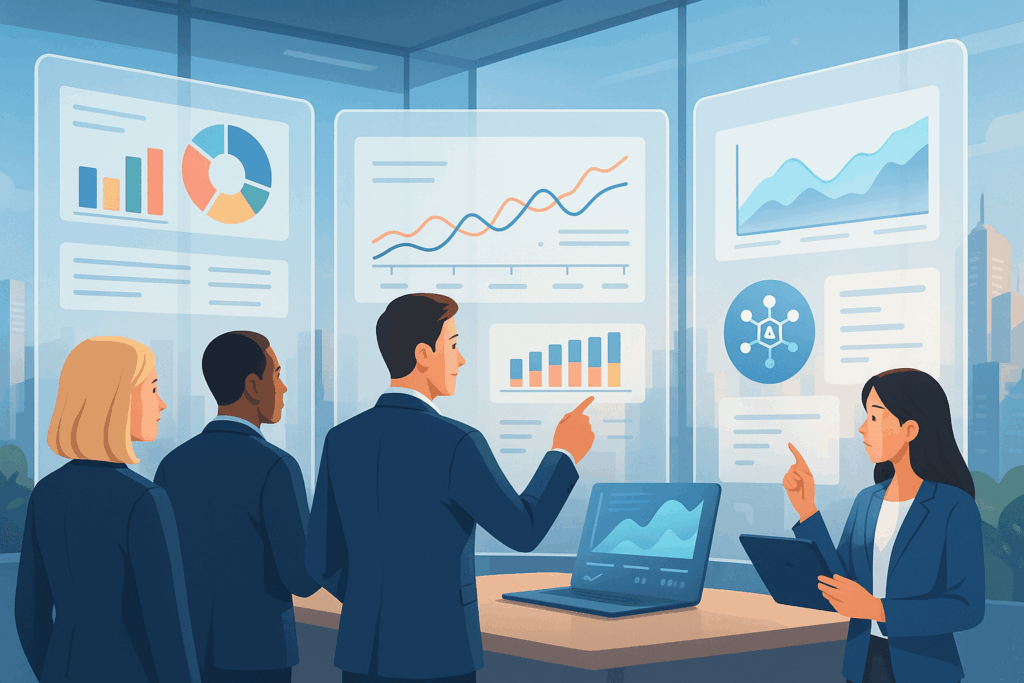
In 2025, this isn’t just a “nice-to-have” capability—it’s a competitive edge. Whether you’re a startup founder, marketing manager, data analyst, or C-level exec, predictive analytics is quietly (and powerfully) transforming how decisions are made. Here’s how.
1. Smarter Customer Insights That Drive Personalization
From Demographics to Intent: Predicting What Customers Will Do Next
Brands are moving past simple segmentation. With predictive models, they can now anticipate individual customer behavior—like when someone is likely to churn or what they might buy next.
Real-World Example
Netflix uses predictive analytics to recommend what you should watch next. But beyond that, it also determines which shows to produce based on viewing trends—blending consumer insight with product strategy.
Business Impact
This approach improves engagement, loyalty, and conversion—three core KPIs in any marketing or sales funnel.
2. Optimized Inventory and Supply Chain Forecasting
Predict Demand Before It Happens
Predictive analytics helps companies forecast demand spikes, seasonality trends, and supply risks. This reduces overstocking or understocking, both of which can crush margins.
Industry Highlight
In retail, Walmart leverages predictive models to anticipate demand surges—such as increased purchases of certain items ahead of storms. That knowledge helps optimize inventory levels across distribution centers.
3. Better Talent Management Through Predictive HR
Hire Smarter, Retain Longer
Data-driven HR teams are now using predictive analytics to identify ideal candidates, predict employee attrition, and even assess team performance dynamics.
Practical Scenario
A growing tech company used attrition prediction to detect that high performers were more likely to leave after 18 months—so they redesigned career paths and incentives to boost retention.
4. Proactive Risk Management and Fraud Detection
Stay Ahead of Trouble
Banks and fintech companies now use predictive algorithms to flag suspicious activity in real-time and assess creditworthiness beyond traditional scoring models.
Example in Action
JPMorgan Chase leverages real-time predictive fraud detection to monitor millions of transactions per day, cutting down fraud losses significantly.
5. Enhanced Product Development with Predictive Market Research
Build What Customers Actually Want
By analyzing search behavior, reviews, feedback loops, and competitive trends, companies can predict what features or products are most likely to succeed.
Data-Backed Example
LEGO used predictive analytics to test multiple product concepts digitally before choosing which ones to produce—saving time and millions in production costs.
6. More Accurate Financial Forecasting
Go Beyond Spreadsheets
Traditional financial forecasting often relies on static models. Predictive analytics brings in dynamic variables—like market trends, sentiment analysis, and consumer behavior—to create more resilient financial plans.
Use Case
SaaS companies use predictive models to estimate recurring revenue, churn risk, and customer lifetime value—all of which affect investor confidence and valuation.
7. Boosting Marketing ROI Through Predictive Targeting
Right Ad, Right Person, Right Time
Imagine knowing which leads are most likely to convert and what message will seal the deal. Predictive lead scoring and ad performance modeling make this possible.
Marketing in Practice
HubSpot uses predictive lead scoring to help businesses prioritize the highest-quality leads—resulting in faster deal cycles and better sales performance.
Wrapping It All Up: The Predictive Advantage
In 2025, businesses no longer rely on gut instinct—they rely on data that talks about the future. Predictive analytics doesn’t replace human strategy—it enhances it. It enables teams to act early, move faster, and make smarter decisions across every department.
Whether you’re optimizing your next campaign, securing your supply chain, or planning your hiring strategy, predictive analytics is no longer an optional tool. It’s your co-pilot for tomorrow.
Ready to Future-Proof Your Business?
Explore how predictive analytics can be integrated into your business today. Start with small models, test outcomes, and build internal capabilities that will drive smarter decisions year after year. The future won’t wait—and now, neither should your business.
