In the fast-paced business world of today, staying competitive requires a combination of innovation, smart strategies, and continuous improvement. Artificial Intelligence (AI) has emerged as one of the most powerful tools to help businesses enhance efficiency, streamline operations, and optimize customer experiences. If you’re looking to take your business to the next level, integrating AI into your operations is a game-changer. In this article, we’ll explore the best ways to integrate AI into your business, offering insights into its advantages, practical applications, and the long-term benefits you can expect. We will also provide a Q&A section to answer some common questions about AI adoption.
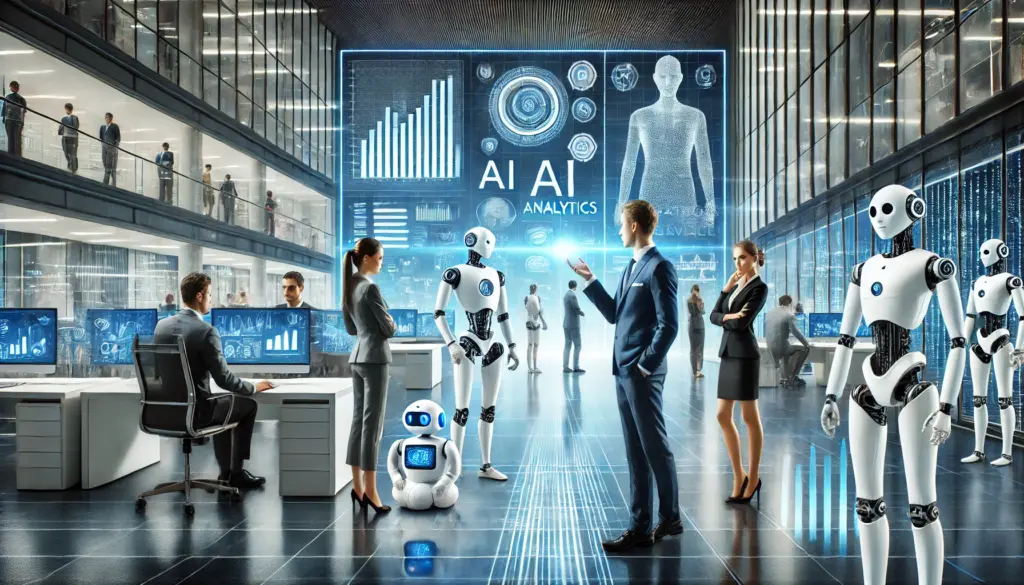
Understanding the Role of AI in Business Efficiency
AI refers to systems or machines that can mimic human intelligence, performing tasks such as data analysis, pattern recognition, and decision-making. By integrating AI into your business, you can automate repetitive tasks, gain valuable insights from data, and optimize operations, leading to increased productivity and efficiency. It has the potential to revolutionize various aspects of your business, from customer service to supply chain management. Let’s dive into the practical ways you can integrate AI into different business functions.
1. Customer Service Automation
Customer service is one of the most visible areas where AI can have an immediate impact. AI-powered chatbots and virtual assistants can provide real-time assistance to customers, answering questions, resolving issues, and handling inquiries. By automating routine interactions, businesses can free up human agents to focus on more complex and personalized tasks, while still maintaining high levels of customer satisfaction. Not only does this enhance the efficiency of your customer service operations, but it also provides a seamless and faster experience for your customers.
2. Data-Driven Decision Making
AI excels at analyzing large volumes of data to uncover patterns and insights that would be difficult or time-consuming for humans to identify. By integrating AI-powered analytics tools, businesses can make data-driven decisions more quickly and accurately. For example, AI can help you forecast trends, identify customer preferences, optimize pricing strategies, and improve inventory management. This leads to more informed decision-making, reducing risks and enhancing overall business performance.
3. Marketing Automation
AI can revolutionize your marketing efforts by automating tasks such as content creation, customer segmentation, and campaign optimization. With AI, you can deliver personalized marketing messages at scale, increasing engagement and conversion rates. Additionally, AI tools can help optimize ad spending by predicting which strategies will yield the best results. By utilizing AI in marketing, businesses can achieve a higher return on investment and reach the right audience more effectively.
4. Supply Chain Optimization
AI has the potential to greatly enhance the efficiency of your supply chain management. With AI-powered forecasting, you can predict demand more accurately, helping you to optimize stock levels and reduce waste. AI can also automate tasks such as inventory tracking, route planning for delivery, and identifying potential supply chain disruptions. This allows businesses to operate more efficiently, reduce costs, and improve delivery times, ultimately enhancing customer satisfaction.
5. Human Resource Management
AI tools can streamline human resource processes by automating tasks like candidate screening, interview scheduling, and employee performance tracking. By leveraging AI for talent management, businesses can find and hire the right candidates more efficiently, as well as provide personalized development opportunities for employees. Moreover, AI can predict employee turnover and help HR departments develop proactive retention strategies.
Q&A: Common Questions About AI Integration
Q: How much does it cost to integrate AI into my business?
A: The cost of integrating AI depends on the complexity of the solution and the size of your business. Small businesses can start with affordable AI tools for specific tasks, while larger organizations might need customized AI systems. However, the long-term benefits, such as cost savings and increased productivity, often outweigh the initial investment.
Q: Can AI be integrated into all types of businesses?
A: Yes, AI can be applied to virtually any business, from retail to healthcare to manufacturing. The key is identifying which areas of your business could benefit from automation or optimization through AI.
Q: What are the risks of adopting AI?
A: While AI can bring substantial benefits, there are risks such as data privacy concerns, the potential for errors, and a dependency on technology. However, by carefully managing these risks, businesses can maximize the advantages of AI integration.
Recommending AI-Friendly Hotels for Your Business Retreat
If you’re considering integrating AI into your business, why not take some time to unwind and explore new ideas in an inspiring environment? Below are some hotel recommendations for a business retreat where you can recharge and strategize:
- The Langham, Chicago – A sophisticated venue with state-of-the-art meeting spaces, The Langham offers a high-tech experience for businesses looking to adopt AI, with a range of AI tools available for conference and event planning.
- W Singapore – Sentosa Cove – Perfect for a mix of work and relaxation, this hotel provides a luxurious space equipped with smart technology for seamless meetings, ideal for businesses seeking to integrate AI.
- Ritz-Carlton, Berlin – With AI-powered concierge services and intelligent meeting rooms, this hotel ensures that your business retreat is both productive and innovative.
Conclusion
Integrating AI into your business operations is not just a trend; it’s a strategic move that can boost your efficiency, reduce costs, and enhance customer experiences. From automating customer service to optimizing supply chains, AI offers tangible benefits that help businesses stay ahead of the competition. As you consider adopting AI, make sure to align it with your business goals and take steps to manage any potential risks. Ultimately, with the right approach, AI can become a valuable asset in driving growth and innovation in your business.
