In an era where artificial intelligence is reshaping how decisions are made, many companies still operate based on instinct, outdated data, or manual analysis. While these methods might have worked in the past, today they could be costing you more than you think—missed opportunities, wasted budgets, and decisions that simply don’t align with real-time realities.
Still Relying on Gut Feelings? Here’s What It’s Costing You
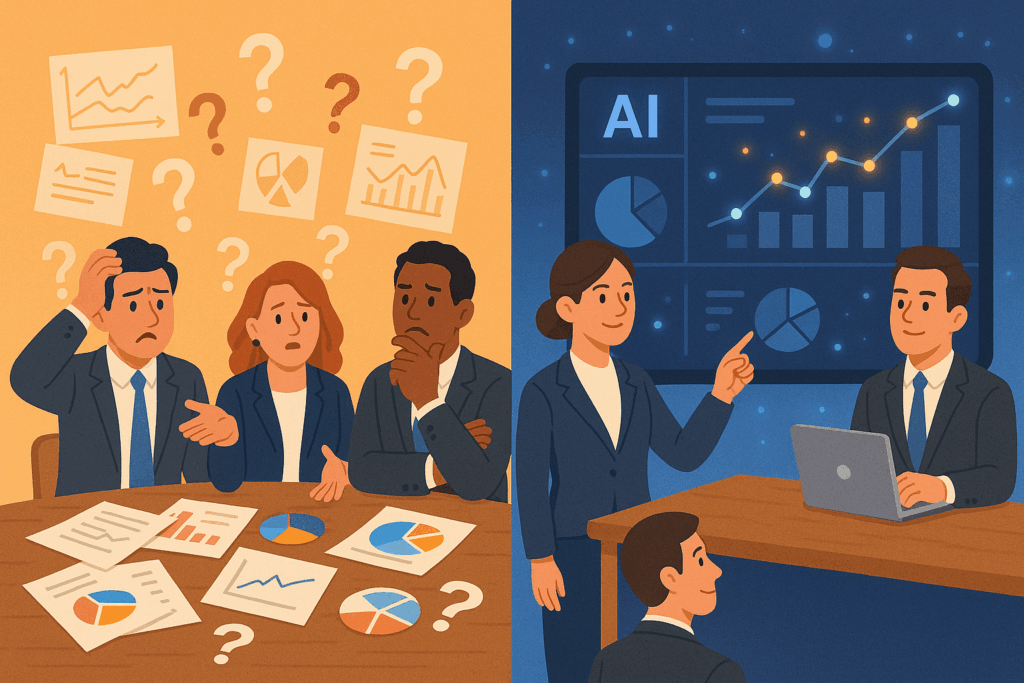
The truth? AI isn’t just a futuristic buzzword—it’s your competitive edge.
From marketing to inventory to HR decisions, AI-driven insights are helping companies move faster, act smarter, and adapt quicker. In this article, we’ll explore five shocking (and common) mistakes businesses make when they overlook AI—and why it’s time to rethink your decision-making strategy.
Mistake #1: Making Assumptions Without Real-Time Data
Why This Happens:
Some teams still rely on monthly reports, Excel spreadsheets, or even gut feelings to make key decisions—without validating them through current data.
The Risk:
Markets change fast. What worked last month might be irrelevant today. Without real-time insights, you risk launching the wrong campaign, restocking slow-moving inventory, or misunderstanding customer behavior.
Real Example:
An e-commerce brand continued running ads targeting “last year’s best-performing audience.” Conversion rates tanked. Once AI-based analytics were introduced, it identified a new audience segment that doubled ROI in two weeks.
Mistake #2: Ignoring Hidden Patterns in Customer Behavior
What You’re Missing:
AI excels at identifying trends and behaviors humans often overlook—like micro-conversions, cart-abandonment timing, or subtle churn signals.
Without AI:
You’re reacting instead of anticipating. You might notice a drop in sales but won’t know why until it’s too late.
Try This:
Use AI tools like predictive analytics to forecast churn, or recommendation engines to personalize user journeys based on past behavior.
Mistake #3: Treating All Customers the Same
The Problem:
Many companies send generic emails, offer flat discounts, or create broad messaging campaigns hoping to reach everyone.
Why It Fails:
Today’s consumers expect relevance. AI enables hyper-segmentation—so you can speak directly to each customer based on their preferences, history, and intent.
Stat to Know:
According to McKinsey, businesses that personalize experiences using AI see a 20%+ increase in customer satisfaction and sales.
Mistake #4: Delaying Critical Decisions Due to Analysis Paralysis
The Struggle:
With endless data, dashboards, and manual reviews, decision-making becomes slow and overwhelming.
The AI Advantage:
AI cuts through the noise. It surfaces actionable insights fast—helping you decide when to scale, pause, pivot, or double down.
Case in Point:
A logistics company used AI to predict delivery delays based on traffic, weather, and past patterns. They rerouted deliveries before problems happened, reducing late shipments by 30%.
Mistake #5: Missing Out on Competitive Opportunities
What’s at Stake:
Your competitors are probably using AI to optimize pricing, automate workflows, and outsmart you in the market.
Warning Sign:
If you’re still running A/B tests manually while others are deploying AI-based multivariate testing across thousands of variables, you’re already behind.
Future-Proofing Tip:
Start small. Adopt AI for one key use case—like email subject line optimization or sales forecasting—and scale up from there.
Final Thoughts: Don’t Let Your Business Decisions Fall Behind
The most dangerous mistake isn’t making a bad decision—it’s failing to recognize a better one. And in today’s data-rich, AI-powered world, smarter decisions are just a few clicks away.
Companies that embrace AI-driven insights move faster, understand customers better, and stay ahead of change. Those that don’t? They risk fading into irrelevance.
What’s Next?
Evaluate where your business could benefit from AI—marketing, operations, HR, sales—and start exploring tools that align with your goals. You don’t need to be a tech giant to get smart with AI. You just need to start.
