Picture this: you’re planning a dream trip, curating the perfect travel itinerary from flights to hidden cafes. Now imagine the same level of smooth coordination happening behind the scenes of global trade and supply chains. That’s exactly what Artificial Intelligence is bringing to logistics today.
When Logistics Meets Wanderlust
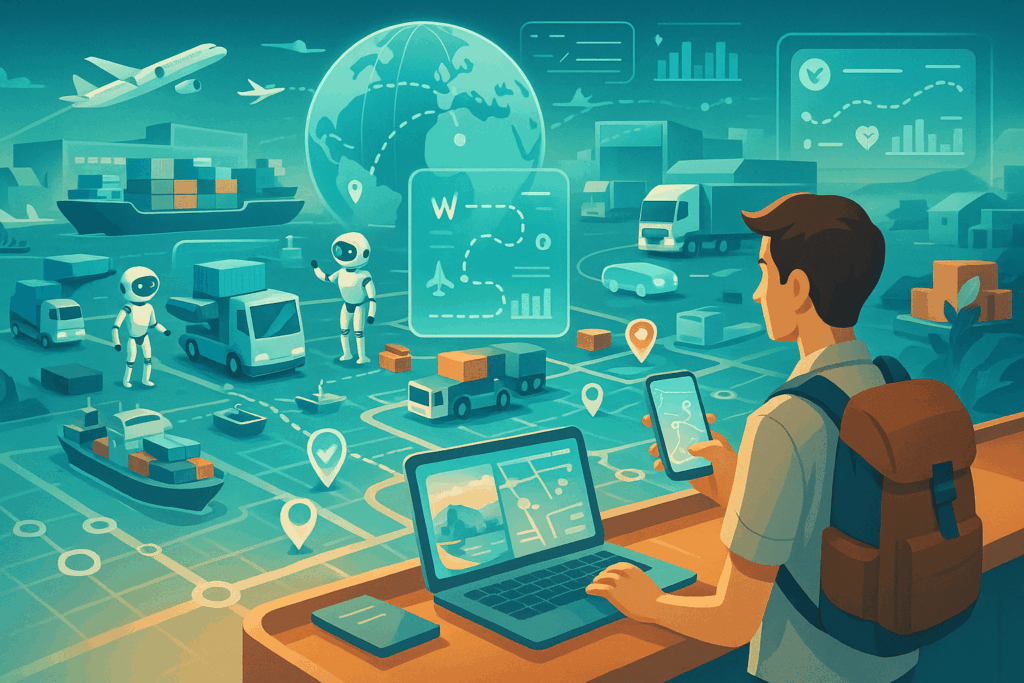
Just as travelers want stress-free vacations, businesses crave flawless supply chain operations. From predicting delays to optimizing delivery routes, AI is reshaping logistics into something as seamless and satisfying as a well-planned travel adventure. Let’s dive into eight powerful AI tools that are making it happen.
1. Predictive Analytics: Your “Trip Forecast” for Supply Chains
Why It Matters
Just as weather forecasts help travelers pack the right clothes, predictive analytics gives companies a clear view of what’s coming. It uses historical data, seasonal trends, and real-time signals to anticipate disruptions.
Real-World Example
- DHL leverages predictive models to anticipate demand spikes around global events like Black Friday.
- Retailers can stock up in advance, just like a traveler booking hotels early for peak season.
2. AI-Powered Route Optimization: The GPS of Global Logistics
Why It Matters
Travelers depend on Google Maps or Waze to avoid traffic. Logistics companies need the same—but on steroids. AI-driven route optimization finds the fastest, safest, and most cost-effective delivery paths.
Real-World Example
- UPS reported saving millions of gallons of fuel annually using ORION, an AI route optimization system.
- Think of it like avoiding tourist traps and discovering secret back alleys that make your trip unique.
3. Smart Warehousing with Robotics
Why It Matters
Imagine a hotel where robots deliver your luggage right to your suite. In logistics, AI-powered robots are doing something similar—automating warehouse tasks to speed up operations and reduce errors.
Real-World Example
- Amazon’s fulfillment centers use robots that pick, pack, and move goods with precision.
- It’s like having a personal travel concierge handling your bags while you relax.
4. AI Chatbots: 24/7 Travel Guides for Customers
Why It Matters
When traveling, you might rely on a tour guide or a chatbot app for quick answers. In logistics, AI chatbots serve as digital assistants, updating customers on shipments and solving issues instantly.
Real-World Example
- FedEx and UPS deploy AI-driven chatbots to answer FAQs, track packages, and manage delays.
- Customers get the same peace of mind as travelers receiving instant itinerary updates.
5. Computer Vision for Cargo Inspection
Why It Matters
Travelers know the hassle of airport security checks. Logistics faces the same challenge when inspecting cargo. Computer vision powered by AI speeds up scanning, reduces human error, and ensures safety.
Real-World Example
- Maersk uses AI-driven scanning systems to inspect containers more efficiently.
- It’s like breezing through an automated passport control instead of waiting in a long queue.
6. Demand Forecasting: Planning Like a Travel Blogger
Why It Matters
Great trips require planning ahead—knowing when destinations are crowded or when flights are cheapest. Similarly, AI-driven demand forecasting helps companies stock the right amount of goods at the right time.
Real-World Example
- Walmart leverages AI to predict local shopping trends, ensuring shelves are stocked without overfilling warehouses.
- It’s like knowing the best time to visit Paris without bumping into endless tourist crowds.
7. AI-Enhanced Risk Management
Why It Matters
Every traveler worries about lost luggage or flight delays. Businesses worry about port closures, supplier failures, or geopolitical risks. AI identifies potential risks early and suggests alternatives.
Real-World Example
- IBM Watson’s AI tools analyze global events to warn supply chain managers of risks before they escalate.
- Like a travel app suggesting alternative routes when your flight is canceled, AI keeps supply chains moving.
8. Sustainability Optimization: Greener Journeys
Why It Matters
Travelers increasingly choose eco-friendly stays and flights. Logistics companies are under pressure to do the same—cut carbon footprints and embrace sustainability. AI helps by finding greener delivery routes and smarter energy use.
Real-World Example
- DHL and UPS deploy AI to minimize emissions by optimizing load capacity and fuel usage.
- It’s like swapping a gas-guzzling taxi for a scenic bike ride or electric scooter.
Storytelling: A Smooth Journey with AI
Imagine a traveler named Alex planning a trip across Europe. He checks forecasts, chooses efficient routes, books eco-friendly stays, and uses travel apps for updates. That’s essentially how companies are using AI—except instead of vacations, they’re moving millions of dollars’ worth of goods. The same principles of smooth coordination, smart planning, and peace of mind apply.
Q&A: Common Questions About AI in Logistics
Q: Will AI replace humans in supply chains?
A: Not entirely. AI handles repetitive tasks, but humans are still needed for strategy, creativity, and relationship-building.
Q: Is AI in logistics expensive?
A: The upfront investment can be high, but long-term savings from efficiency, fuel reduction, and risk management outweigh the costs.
Q: How soon will AI dominate global logistics?
A: Many large companies already use AI. Over the next 5–10 years, adoption will become mainstream, much like how travelers rely on Google Maps today.
Conclusion: Logistics as a Perfect Itinerary
AI is turning logistics into a curated journey—predictable, efficient, and stress-free. From forecasting and route optimization to sustainability, these tools make global supply chains flow as smoothly as a dream vacation.
Call-to-Action:
If you’re curious about the future of logistics or already working in the field, start exploring AI-powered tools today. Just like planning your next trip, the earlier you adopt smart strategies, the smoother the journey will be.
