Supply chains used to run on manual processes, endless spreadsheets, and guesswork. Fast forward to 2025, and artificial intelligence is reshaping how goods move around the world. From predicting customer demand to rerouting shipments in real time, AI is no longer just a futuristic buzzword—it’s a practical tool making supply chains smarter, faster, and more reliable.
Why AI is Changing the Game
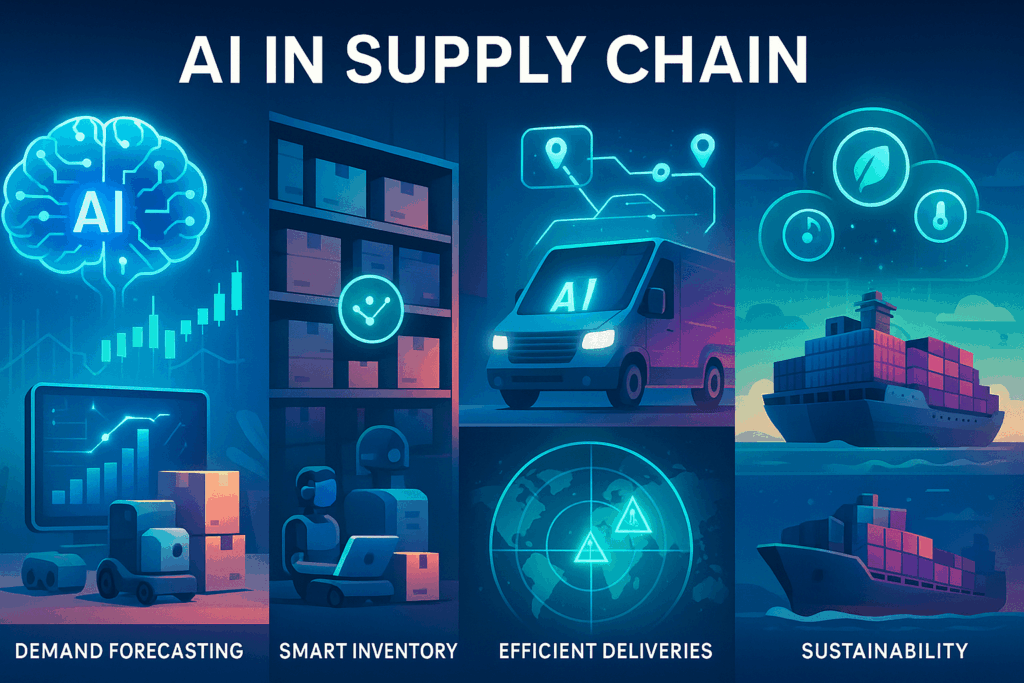
If you’ve ever wondered how Amazon ships millions of packages in record time, or how global retailers manage to keep products stocked despite disruptions, AI is often the secret sauce. In this article, we’ll explore five proven benefits of using AI in supply chain management that every logistics professional—and even curious beginners—should know.
1. Improved Demand Forecasting
From Guesswork to Precision
One of the biggest headaches in supply chain management is predicting demand. Get it wrong, and you’re left with empty shelves or wasted inventory.
AI-powered forecasting tools analyze historical sales data, market trends, weather patterns, and even social media chatter to predict demand more accurately. Instead of relying on gut feeling, managers now get precise, data-driven forecasts.
Example in Action
For instance, Walmart uses AI to adjust inventory levels before storms. By tracking weather reports, the system anticipates spikes in demand for items like bottled water and batteries, ensuring shelves are stocked at the right time.
2. Smarter Inventory Management
Balancing Supply and Storage Costs
Holding too much inventory drains cash flow, while too little inventory risks losing customers. AI helps strike the perfect balance.
AI systems monitor stock levels in real time and recommend replenishment before shortages occur. They can even identify slow-moving products so companies avoid unnecessary warehouse costs.
Storytelling Insight
Imagine a small e-commerce business selling fashion items. With AI, it notices that a specific shoe size sells faster in urban areas compared to rural ones. By redirecting stock accordingly, they avoid overstock in one location and shortages in another.
3. Faster and More Efficient Deliveries
Optimizing Routes in Real Time
Delivery delays are costly, both financially and in customer trust. AI-driven logistics platforms use real-time traffic data, fuel costs, and weather updates to find the fastest and most efficient routes.
This is especially crucial for companies managing fleets of trucks. A five-minute reduction in delivery time per truck, multiplied across hundreds of vehicles, results in massive savings.
Example in Action
UPS uses an AI tool called ORION (On-Road Integrated Optimization and Navigation), which has saved the company millions of gallons of fuel and reduced CO2 emissions by optimizing delivery routes.
4. Stronger Risk Management
Predicting and Preventing Disruptions
Supply chains are vulnerable to disruptions—from factory shutdowns to port delays. AI doesn’t eliminate these risks, but it makes companies better prepared.
By analyzing real-time data from suppliers, geopolitical news, and even satellite imagery, AI can flag potential risks before they turn into crises.
Data Example
According to a Deloitte study, companies that use AI in risk management reduce the impact of disruptions by up to 40% compared to those relying on traditional methods.
5. Enhanced Sustainability and Cost Savings
Doing Good While Saving Money
Sustainability is no longer optional—consumers demand it, and regulators enforce it. AI helps companies reduce waste, optimize fuel usage, and minimize energy consumption.
Example in Action
For example, Maersk, one of the world’s largest shipping companies, uses AI to optimize vessel speed and fuel consumption. This not only lowers costs but also reduces carbon emissions significantly.
Additional Benefits Worth Noting
- Better Customer Experience: Faster deliveries and accurate stock availability build stronger loyalty.
- Automation of Repetitive Tasks: AI chatbots handle customer queries, freeing up staff for complex issues.
- Global Visibility: AI dashboards give managers a bird’s-eye view of supply chains worldwide.
Conclusion: The Future is Already Here
Artificial intelligence is no longer a “nice-to-have”—it’s a must-have for supply chain management in 2025. From forecasting demand to cutting delivery times and enhancing sustainability, the benefits are both proven and measurable.
The companies adopting AI today are setting themselves up for a future of lower costs, greater efficiency, and stronger resilience. Those who ignore it risk falling behind.
Call-to-Action:
If you’re in logistics or supply chain management, now is the time to start small. Try a simple AI-powered tool for inventory or forecasting, and see the difference. The earlier you adopt, the faster you gain the competitive edge.
