You’ve probably heard the phrase “machine learning” thrown around in business meetings, tech articles, and startup pitches. But in 2025, machine learning (ML) is no longer just a buzzword — it’s quietly becoming the backbone of modern workflows across industries.
From automating repetitive tasks to predicting customer behavior and optimizing decision-making, ML is reshaping how businesses operate on a daily basis. And the best part? You don’t have to be a data scientist to benefit from it.
The Machines Are Learning — And So Should We
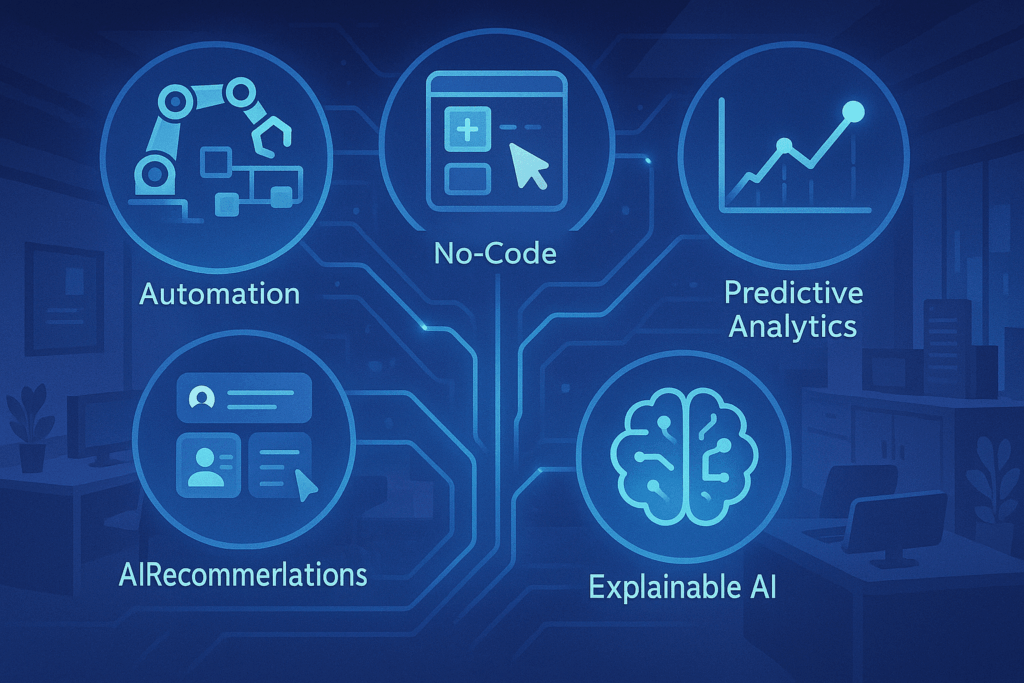
In this article, we’ll break down five key machine learning trends that are set to reshape your workflow in 2025 — in plain language, with real-world examples, and practical takeaways.
1. Hyper-Automation Powered by ML
What’s the Big Deal?
Hyper-automation goes beyond traditional automation by combining machine learning, robotic process automation (RPA), and AI to automate complex workflows — not just basic, repetitive tasks.
How It’s Changing the Game
Instead of automating one task at a time, companies are building end-to-end workflows that adapt and improve over time. Imagine onboarding a new employee: with hyper-automation, everything from document verification to account provisioning can happen seamlessly with minimal human input.
Real-World Example
A logistics company integrated ML-powered automation to streamline invoice processing. The result? A 75% reduction in manual workload and near-zero errors in billing.
What You Can Do
- Identify repetitive processes that span multiple departments
- Explore tools like UiPath, Automation Anywhere, or Microsoft Power Automate with ML plugins
2. No-Code & Low-Code ML Tools for Everyone
Why It’s a Trend
In the past, machine learning was locked behind lines of code and complex algorithms. Not anymore. No-code and low-code platforms are making ML accessible to business analysts, marketers, and even HR teams.
Key Benefits
- Rapid experimentation without needing a data science team
- Reduced development time for ML-powered features
- Democratization of AI across departments
Example in Action
A retail team used a no-code platform to create a churn prediction model by dragging and dropping data points. Within hours, they had insights that previously took weeks to uncover.
Tools to Explore
- Google AutoML
- DataRobot
- Peltarion
- Microsoft Azure ML Designer
3. Predictive Analytics Becomes Everyday Practice
What’s Evolving
Predictive analytics — once used mostly by finance or data science teams — is becoming standard in day-to-day business decision-making.
Thanks to embedded ML models in platforms like Salesforce, HubSpot, or Zoho, teams can now forecast trends, detect anomalies, and optimize campaigns without even realizing ML is behind the scenes.
Story Example
A mid-sized eCommerce brand used ML-powered predictive analytics to optimize ad spend. The model learned from past campaigns and shifted budgets in real-time to high-performing channels, increasing ROI by 32%.
Your Next Steps
- Integrate predictive dashboards into your CRM and marketing tools
- Use historical data to train basic models and test small predictions
4. AI-Powered Personalization Across the Workflow
Why It Matters
Whether you’re in sales, support, or content creation, personalization is no longer a nice-to-have — it’s an expectation. ML is now being used to personalize not just products or emails, but workflows themselves.
Examples You’ll Recognize
- Sales platforms suggesting next-best actions based on customer behavior
- Project management tools adapting timelines based on team productivity
- Internal chatbots that prioritize support tickets using sentiment analysis
Case Study
A software company used ML to personalize onboarding flows for new customers. Based on user behavior in the first 48 hours, the system automatically adjusted tutorials and tooltips — resulting in a 20% increase in user activation rates.
Take Action
- Map areas in your workflow where users drop off or slow down
- Test ML personalization features in your SaaS tools (many are built-in now)
5. Explainable AI (XAI) Gains Momentum
The Problem with Black-Box Models
While machine learning can be powerful, many ML models operate like black boxes — you get an output, but it’s not always clear why or how it made that decision. In regulated industries, that’s a serious issue.
Enter: Explainable AI
XAI helps make ML decisions transparent, auditable, and trustworthy. It’s especially critical in industries like finance, healthcare, and law, where decisions must be justified.
Practical Example
A bank uses an ML model to assess loan applications. With XAI, they can now show customers exactly which factors influenced the approval or rejection — improving trust and compliance.
Tools for the Curious
- LIME (Local Interpretable Model-Agnostic Explanations)
- SHAP (SHapley Additive exPlanations)
- Google’s What-If Tool
Wrapping It Up: ML Isn’t the Future — It’s Now
Machine learning is no longer just about self-driving cars or Silicon Valley labs. It’s about smarter tools, faster workflows, and better decisions — and it’s already happening in businesses like yours.
Whether you’re running a small marketing team or managing enterprise operations, the five trends above are signals of where things are headed. The best part? You don’t need to become an AI expert to keep up — you just need to stay curious and open to testing new tools.
Call to Action
Ready to future-proof your workflow with machine learning?
Start small. Pick one trend from this list and experiment in your own workflow. And don’t forget — the companies that adapt first often lead the pack. Your future business efficiency might just be one ML feature away.
