Imagine being able to look ahead and know what your customers will want, when your stock will run out, or how your sales will perform next quarter. Sounds like magic? It’s not. Predictive analytics and forecasting tools are making that vision real—and in 2025, it’s not just the big tech companies using them anymore.
The Future Can Be Predicted—If You Use the Right Tools
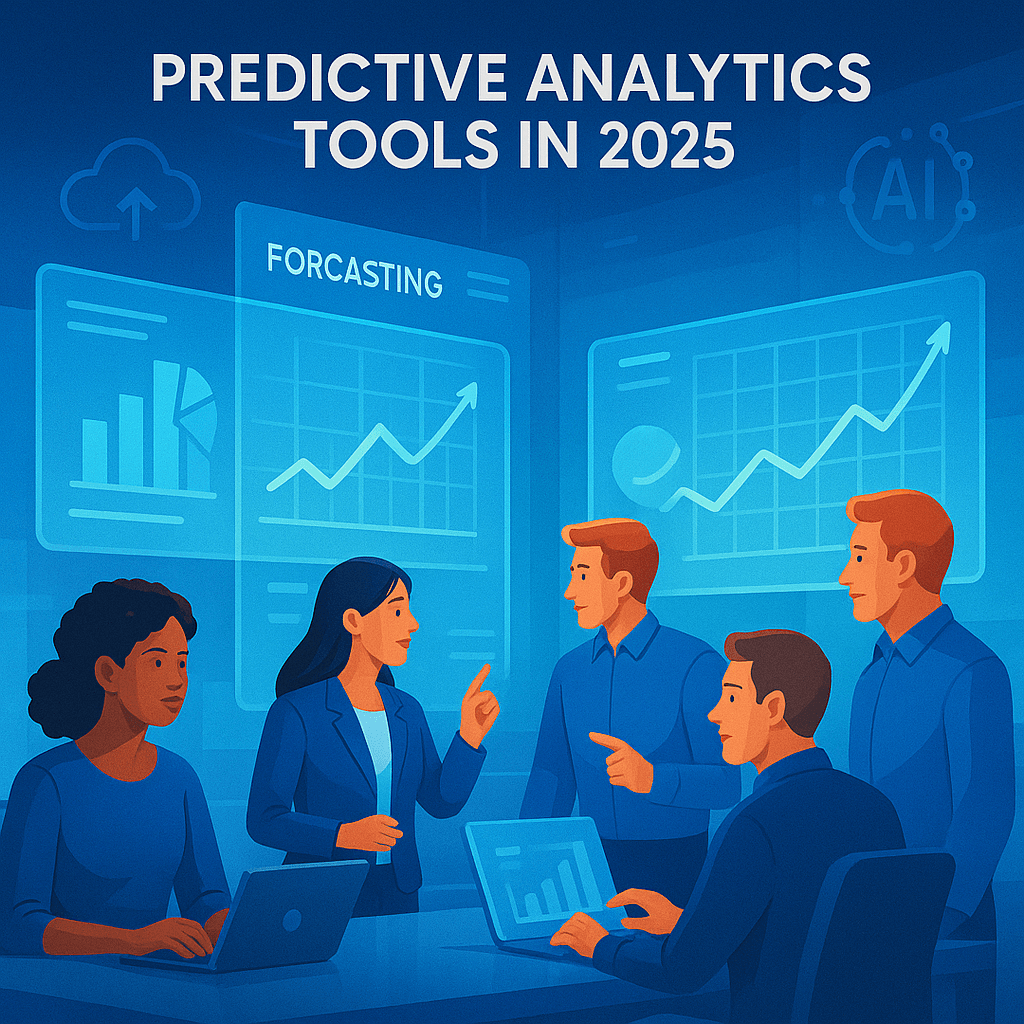
Whether you’re running a startup, managing supply chains, or handling marketing data, the right forecasting tool can save time, reduce waste, and boost profits. In this article, we’ll break down five top tools you should seriously consider—each one backed by data, trusted by professionals, and surprisingly easy to use.
Why Forecasting Tools Matter More Than Ever in 2025
The Rise of Data-Driven Decisions
More businesses are relying on data than ever before. In fact, according to a 2024 Gartner report, 82% of companies say predictive analytics is critical to their growth strategy. That means forecasting is no longer a “nice-to-have”—it’s essential.
Real-World Example: Forecasting Saves Millions
One retail chain used a forecasting tool to predict demand changes across regions during seasonal events. The result? A 30% reduction in overstocking and millions saved in logistics and storage costs.
So now the question is: which tools are actually worth using?
Top 5 Forecasting Tools to Watch in 2025
1. Amazon Forecast
Best for: Developers and businesses already on AWS
Why it stands out:
Amazon Forecast uses machine learning to provide highly accurate time-series forecasts. It supports data like sales, inventory, and web traffic. Since it’s fully managed, you don’t need to build ML models from scratch.
Key Features:
- Integrates with AWS services
- Uses AutoML to select the best algorithm
- Scales easily for enterprise needs
Use Case:
An eCommerce brand improved demand planning and reduced stockouts by 25% using Amazon Forecast.
2. IBM SPSS Forecasting
Best for: Analysts and researchers
Why it stands out:
SPSS has been a trusted name in data analysis for decades. The forecasting module allows users to apply ARIMA, exponential smoothing, and seasonal models with minimal coding.
Key Features:
- Easy drag-and-drop UI
- Advanced statistical models
- Ideal for academic and enterprise environments
Pro Tip:
Use historical sales data to train SPSS and compare performance against manual methods—you’ll see a clear difference.
3. Google Cloud AI Forecasting
Best for: Tech teams looking for cutting-edge models
Why it stands out:
Google’s Vertex AI includes time-series forecasting with strong AutoML capabilities. It’s especially powerful when combined with BigQuery for handling large datasets.
Key Features:
- Deep learning and ensemble models
- Automated hyperparameter tuning
- Great scalability for big data use cases
Fun Fact:
Several fintech startups are using Google Cloud to predict loan defaults with up to 95% accuracy.
4. Tableau with Einstein Discovery
Best for: Business users who love dashboards
Why it stands out:
Tableau has partnered with Salesforce’s Einstein Discovery to bring AI-powered forecasting into your dashboards. You can visualize trends and predictions in real time, no code needed.
Key Features:
- Intuitive visual interface
- Seamless integration with Salesforce data
- Actionable predictions with explanations
Storytelling Tip:
Use Tableau to show the “what happened” and “what will happen” together—great for reports and board meetings.
5. Kaggle Notebooks + Prophet by Meta
Best for: Data scientists and learners
Why it stands out:
Prophet, developed by Meta (Facebook), is open-source and works well with messy, real-world data. Combined with Kaggle’s cloud-based notebooks, it’s a great playground for testing forecasting models without complex setup.
Key Features:
- Transparent model structure
- Handles missing data and seasonality
- Active community for learning and support
Data Nerd Tip:
Try uploading your Google Trends CSV to Kaggle and running Prophet—you’ll be surprised how easy and insightful it is.
Choosing the Right Tool for You
| Tool | Ideal For | Requires Coding? |
|---|---|---|
| Amazon Forecast | Businesses on AWS | No |
| IBM SPSS | Researchers, Analysts | No |
| Google Cloud AI | Tech-savvy teams | Some |
| Tableau + Einstein | Dashboard lovers | No |
| Prophet + Kaggle | Data science learners | Yes |
Final Thoughts: Don’t Just Guess, Forecast
In 2025, relying on gut feeling isn’t enough. Forecasting tools help you plan better, reduce risks, and grow smarter. Whether you’re a data analyst, business owner, or student, one of these tools can fit your needs—and they’re more accessible than ever.
Ready to Predict the Future?
Start small. Pick one tool from this list that matches your style and experiment. Even a simple forecast can reveal trends you’ve been missing—and that insight can lead to smarter decisions, happier customers, and bigger wins.
