Artificial Intelligence (AI) is no longer a futuristic concept—it’s right here, quietly revolutionizing the logistics industry behind the scenes. While most people associate AI with robotics and automation, its true potential goes far beyond that. In fact, some of the most impactful benefits of AI in logistics are the ones rarely discussed.
The Surprising Side of AI in Logistics
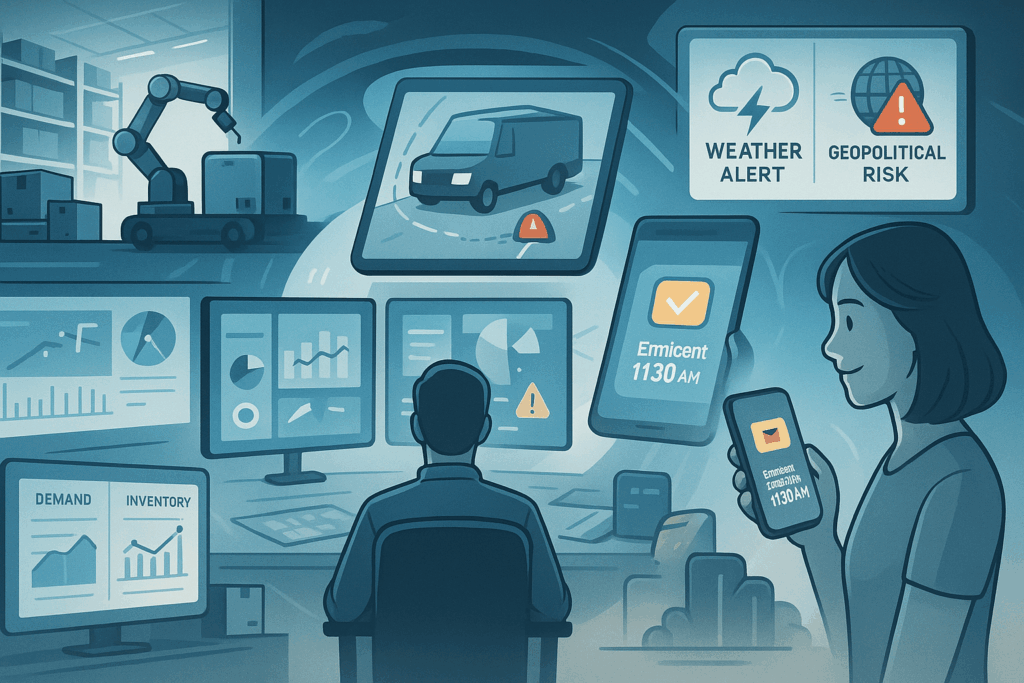
If you thought AI was just about reducing labor or speeding up deliveries, you’re only scratching the surface. Let’s dive into five hidden advantages that are transforming supply chain operations in ways that might surprise you.
1. Predictive Inventory Management That Thinks Ahead
Smarter Stock, Fewer Surprises
Managing inventory has always been a balancing act. Overstocking leads to waste and storage costs, while understocking results in missed sales and unhappy customers. AI changes the game with predictive analytics.
How it works:
AI systems analyze massive datasets—past sales, seasonal trends, supplier performance, even weather patterns—to forecast demand more accurately than any human could.
Real-world example:
Amazon uses machine learning algorithms to anticipate what customers will buy next week—and starts moving inventory closer to regional warehouses before the order is even placed.
Bottom Line:
This leads to better stock availability, reduced holding costs, and a smoother customer experience.
2. Real-Time Route Optimization That Saves More Than Just Time
It’s Not Just About Getting There Faster
AI-powered route optimization doesn’t just pick the shortest path. It considers live traffic data, road closures, weather updates, and even fuel efficiency.
Use case:
A delivery company might feed historical GPS data into an AI system that learns which routes are fastest at different times of day, adjusting in real time.
Result:
Companies like UPS report saving millions annually by shaving just a few minutes off each route using AI-enhanced logistics planning.
Bonus Benefit:
Reduced fuel consumption also supports sustainability goals—making your operations greener without extra cost.
3. Proactive Risk Management Before Problems Happen
AI Sees Trouble Coming
Disruptions in supply chains—whether due to political unrest, supplier failure, or natural disasters—can cost millions. Traditional systems often react too slowly. AI, on the other hand, anticipates these risks.
How AI helps:
By scanning news feeds, social media, supplier data, and transportation networks in real-time, AI can flag potential issues before they escalate.
Imagine this:
You’re sourcing materials from Southeast Asia. An AI system detects a typhoon warning and alerts your procurement team to shift suppliers or reroute shipments—days before the storm hits.
Why It Matters:
Early warnings equal faster responses, less downtime, and major cost avoidance.
4. Hyper-Personalized Customer Experiences
Yes, Even in Logistics
You might think logistics is purely B2B and behind-the-scenes, but AI is helping companies deliver Amazon-level experiences to individual customers.
Example:
AI can track not only where a customer’s package is, but predict exactly when it will arrive—down to the hour—and communicate that via personalized updates.
In practice:
Retailers can now adjust delivery times based on a customer’s preferred window or notify them if delays occur, reducing customer service calls and improving satisfaction.
Insight:
Customer loyalty often hinges on the final delivery experience—AI helps you nail it.
5. Smarter Warehouse Automation That Learns as It Works
From Robots to Intelligence
Warehouse robots are nothing new, but when paired with AI, they become smarter every day.
What’s different?
AI-powered systems don’t just follow instructions—they adapt. If one process slows down, the system re-routes items to another station. If a pattern of delays is detected, it flags it and offers suggestions.
Example:
Zebra Technologies uses AI to monitor warehouse workflows in real time, suggesting layout changes or workflow tweaks to boost speed.
The Hidden Advantage:
AI helps warehouses run like living organisms—constantly evolving, always optimizing.
Conclusion: Don’t Sleep on These “Invisible” Advantages
AI in logistics isn’t just about flashy robots or futuristic ideas—it’s already here, solving real problems and unlocking efficiency in ways many businesses overlook. From predictive inventory to proactive risk management, the hidden benefits of AI are changing the rules of the game.
Ready to explore how AI can transform your supply chain? Start with small pilot projects, leverage data you already have, and scale from there. The sooner you start, the further ahead you’ll be.
