Chatbots are everywhere—from retail websites to banking apps to food delivery platforms. And let’s be honest: when they work well, they really work. But when they don’t? They frustrate users, waste time, and quietly damage your brand reputation.
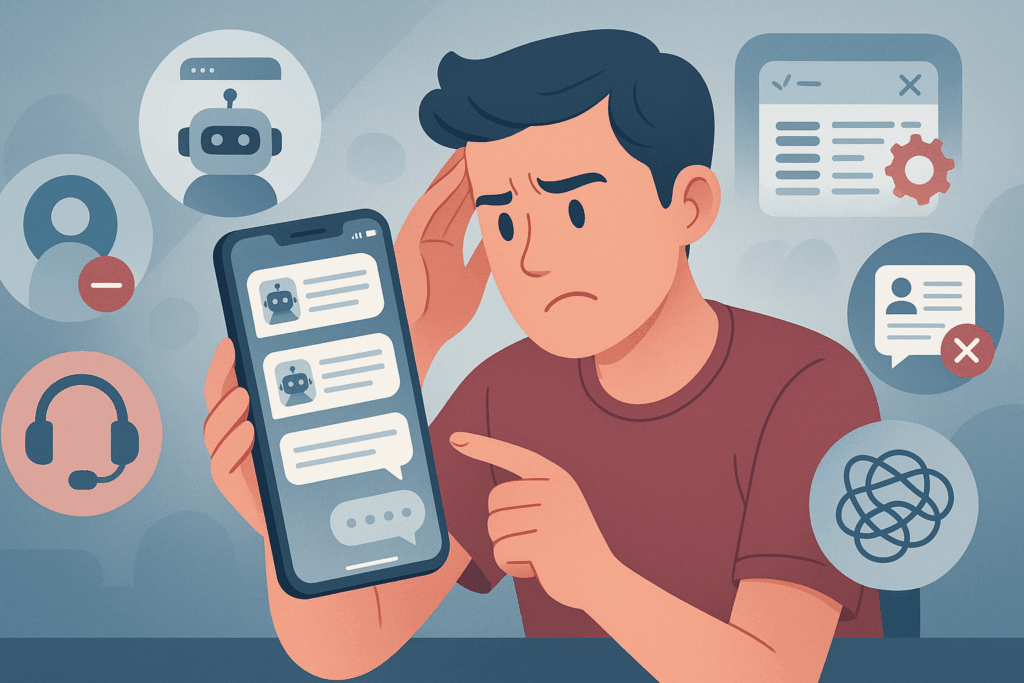
The rise of AI-powered customer service has brought efficiency and 24/7 support to the forefront. However, many businesses implement chatbots without fully understanding the customer journey, leading to disappointing and even damaging experiences. In this article, we’ll unpack five of the most common chatbot mistakes that may be silently killing your customer experience—and how to fix them.
1. Making the Bot Too Scripted and Robotic
Where Personality Meets Function
Customers don’t want to talk to a robot—they want to talk to a smart robot. A chatbot that sticks too rigidly to pre-programmed responses can leave users feeling ignored or misunderstood.
A Real Scenario
Imagine asking a chatbot, “Can I return my shoes if I wore them once?” and getting a generic reply like “Our return policy is 14 days.” That response might be accurate, but it’s not helpful. The bot missed the nuance of the question.
Tip: Use natural language processing (NLP) to interpret intent, and train your chatbot with common variations of real questions.
2. Trying to Do Too Much Too Soon
The Problem With Over-Ambition
Many brands fall into the trap of expecting their chatbot to handle everything from sales to complaints to troubleshooting. The result? A jack-of-all-trades bot that confuses users instead of helping them.
A Simple Fix
Focus on one or two high-impact tasks first—like order tracking or basic FAQs—then gradually scale. This ensures quality and performance while building trust with users.
Tip: Start with clear, measurable goals for your chatbot and track performance via customer feedback and analytics.
3. Failing to Provide a Human Escalation Path
When “I Want to Talk to a Human” Hits a Wall
One of the most frustrating user experiences is being stuck in an endless loop with a chatbot—especially when the issue is urgent or complex. If there’s no clear way to reach a human agent, your customer satisfaction score is bound to suffer.
Data Speaks
According to a PwC study, 59% of consumers feel companies have lost touch with the human element of customer experience. Forcing users to deal solely with bots contributes to this perception.
Tip: Always provide a visible “Talk to a human” option and set response time expectations clearly.
4. Poorly Designed Conversation Flows
Confusing, Clunky, and Circular
Conversation flow is everything. If your chatbot doesn’t guide users logically, or keeps asking the same questions, users will abandon the interaction—and possibly your brand.
Think Like a UX Designer
Just as a website needs intuitive navigation, your chatbot needs thoughtful branching logic. Avoid asking too many questions at once, and don’t make users repeat themselves.
Tip: Use tools like Chatfuel, Landbot, or Dialogflow to visually map out your conversation trees and test them regularly.
5. Ignoring Post-Interaction Feedback
Feedback Isn’t Optional
Most businesses collect website or product feedback—but forget the chatbot. If you’re not asking users how their chatbot experience was, you’re missing crucial improvement insights.
Easy Implementation, Big Impact
Even a simple thumbs-up/thumbs-down option or a one-question survey after chat can provide a goldmine of data.
Tip: Use this feedback to retrain your bot and close experience gaps. Pair it with conversation logs to identify pain points.
Conclusion: A Smarter Bot = A Happier Customer
Your chatbot should be an asset, not a liability. But small oversights—like forcing robotic responses or skipping feedback—can quickly turn customers away. The good news? Every mistake above is fixable.
By treating your chatbot like a real part of your customer service team—with training, review, and feedback—you can turn it into a tool that delights users instead of driving them away.
Call-to-Action:
Ready to improve your customer experience with intelligent bots? Start by auditing your current chatbot journey and see where these five mistakes might be hiding. And don’t forget to subscribe to our newsletter for more customer service insights and AI-powered CX strategies.
