The rise of artificial intelligence (AI) and automation has transformed industries across the globe, and manufacturing is no exception. In the face of growing demand for efficiency and cost-effectiveness, manufacturers are increasingly turning to AI and automation to revolutionize their processes. These technologies not only enhance productivity but also significantly reduce operational costs. The integration of AI in manufacturing opens doors to smarter decision-making, predictive maintenance, and improved overall efficiency. Let’s explore the remarkable impact AI and automation are having on the manufacturing sector and how businesses are leveraging these technologies for maximum gains.
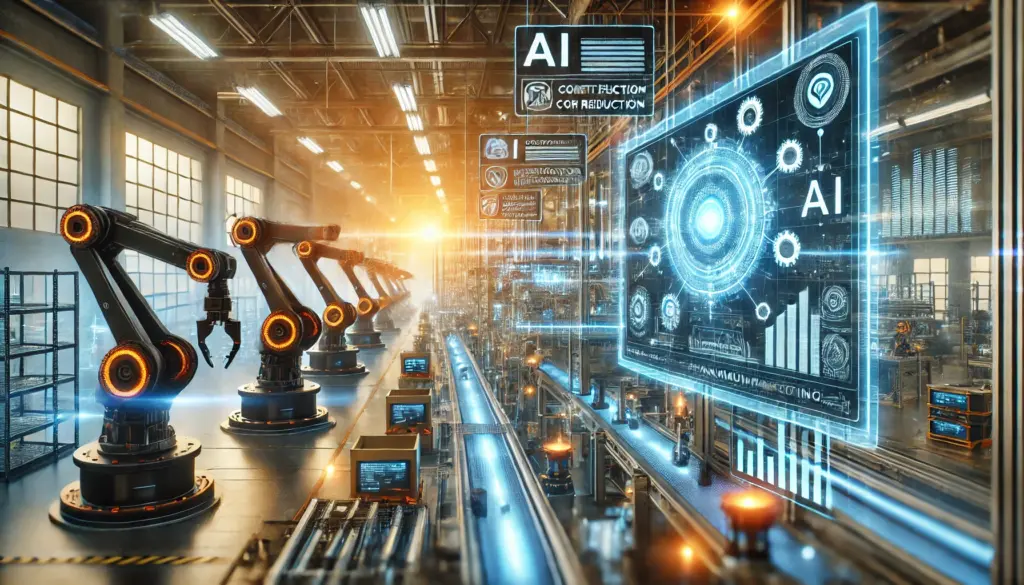
The Role of AI in Manufacturing Efficiency
AI is at the heart of manufacturing innovation, helping companies optimize their production lines in ways that were previously unimaginable. One of the most significant benefits of AI is its ability to analyze vast amounts of data in real-time. By using machine learning algorithms, AI can predict potential breakdowns or inefficiencies before they occur, allowing manufacturers to perform proactive maintenance. This reduces downtime and ensures that production continues without costly interruptions.
Moreover, AI-powered systems can adjust operations on the fly, optimizing workflows based on the current production conditions. This real-time adaptability enables manufacturers to maintain a high level of productivity, even in dynamic environments. In industries where precision and accuracy are critical, such as electronics and automotive, AI ensures that every part is crafted to exact specifications, leading to fewer errors and higher quality products.
Automation: The Backbone of Cost Reduction
Automation is the driving force behind significant cost savings in manufacturing. By automating repetitive tasks that were previously performed by human workers, companies can drastically reduce labor costs. From assembly lines to packaging and quality control, robots and automated systems can handle tasks with remarkable efficiency. This reduction in manual labor not only cuts costs but also minimizes the risk of human error, ensuring consistent product quality.
Robots equipped with AI can work around the clock, increasing throughput without the need for breaks or shift changes. This maximizes the use of existing infrastructure, making the entire manufacturing process more cost-effective. Automated systems can also scale operations seamlessly, allowing businesses to adjust production levels based on demand without having to hire additional staff or invest in new equipment.
Enhancing Decision-Making with AI and Automation
AI and automation go beyond just improving operational efficiency; they also enhance decision-making processes. With the ability to collect and analyze data from every aspect of production, AI provides manufacturers with insights that can drive better business decisions. By tracking performance metrics in real-time, AI can identify trends and patterns that humans might overlook. This predictive analysis helps businesses make informed decisions on everything from resource allocation to supply chain management.
Automation plays a complementary role by executing decisions made by AI with precision and speed. For instance, once an AI system identifies a bottleneck in production, automated systems can be instructed to reroute resources or adjust machinery settings to eliminate the issue. This seamless coordination between AI and automation leads to a more efficient and responsive manufacturing environment.
The Future of AI and Automation in Manufacturing
Looking ahead, the future of AI and automation in manufacturing is incredibly promising. As AI technologies continue to evolve, they will become even more adept at handling complex tasks and making sophisticated decisions. Automation will evolve to incorporate new technologies, such as collaborative robots (cobots), that work alongside human operators to further enhance production efficiency.
The integration of AI with the Internet of Things (IoT) will also play a pivotal role in the manufacturing landscape. IoT sensors will gather real-time data from machines, and AI will process that data to predict maintenance needs or optimize production schedules. This connected ecosystem will provide manufacturers with unparalleled visibility into their operations, leading to even greater cost savings and efficiency gains.
Q&A Section: Addressing Key Questions About AI and Automation in Manufacturing
Q: What industries benefit the most from AI and automation in manufacturing? A: While AI and automation can benefit nearly every industry, sectors like automotive, electronics, and consumer goods see some of the most substantial gains. These industries rely on high-volume production and precision, which are greatly enhanced by AI and automation technologies.
Q: How can small manufacturers implement AI and automation? A: Small manufacturers can start by focusing on specific areas that offer the highest return on investment. For example, integrating AI for predictive maintenance or automating repetitive tasks can yield immediate benefits without the need for a full-scale overhaul of operations.
Q: Are there any risks associated with AI and automation in manufacturing? A: One potential risk is the displacement of workers. However, many companies are focusing on reskilling their workforce to operate alongside AI and automation systems. Additionally, cybersecurity concerns must be addressed, as more connected systems increase the risk of data breaches.
Q: How can manufacturers measure the success of AI and automation implementation? A: Success can be measured through various key performance indicators (KPIs), including reduced downtime, improved product quality, cost savings, and increased production efficiency. These metrics provide clear insights into the effectiveness of the technology.
Conclusion: The Future of Manufacturing is Smarter and More Efficient
AI and automation are reshaping the manufacturing industry, offering businesses the tools to enhance productivity, improve product quality, and reduce operational costs. By embracing these technologies, manufacturers can stay competitive in an increasingly demanding market. As AI continues to evolve and automation becomes more sophisticated, the potential for innovation in manufacturing is boundless. The future promises a manufacturing landscape that is not only smarter but also more agile and efficient, setting the stage for new breakthroughs and opportunities.
