In today’s fast-paced world, supply chains are no longer just about moving goods from point A to point B. They’ve become complex networks that require speed, precision, and adaptability. From global retailers to small e-commerce startups, everyone relies on supply chains that can keep up with growing demand while minimizing disruption.
Here’s where Artificial Intelligence steps in. Imagine predicting demand before customers even make a purchase, rerouting shipments in real-time to avoid delays, or identifying risks before they happen—all powered by AI. These aren’t futuristic dreams anymore; they’re happening now.
When Supply Chains Meet Smart AI
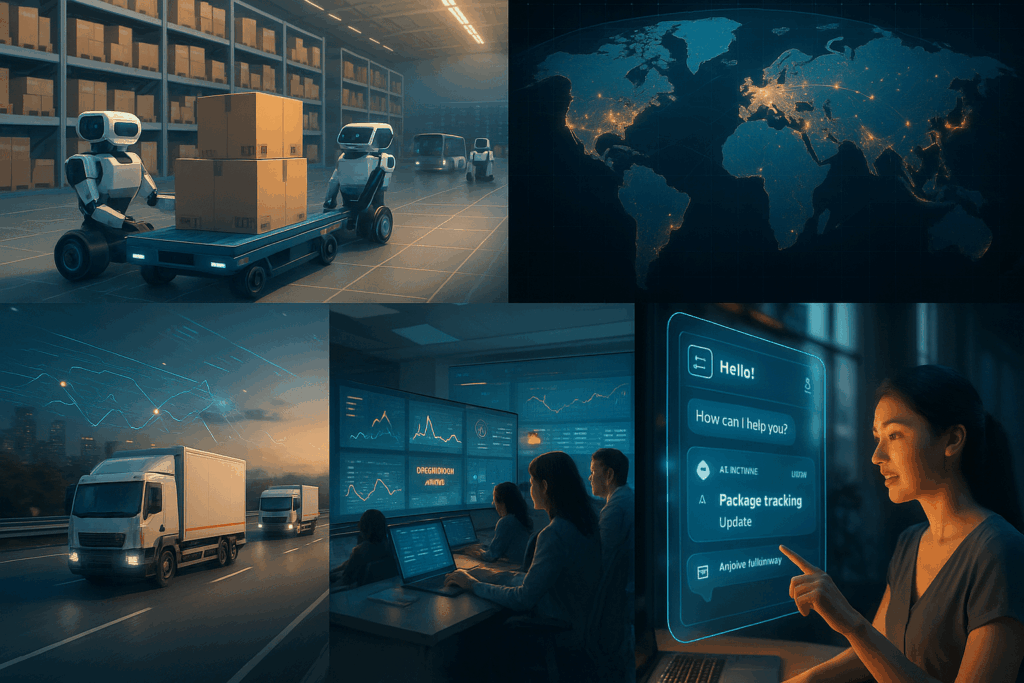
In this article, we’ll explore 5 game-changing AI tools that are transforming supply chain efficiency across the globe.
1. Predictive Analytics Platforms – Forecasting with Precision
What It Does
Predictive analytics uses AI algorithms to analyze historical data, market trends, and even weather conditions to forecast demand.
Why It Matters
- Reduces stockouts and overstocking.
- Helps companies optimize inventory levels.
- Supports proactive decision-making rather than reactive responses.
Example
Amazon uses predictive algorithms to anticipate what products customers are likely to buy, often stocking warehouses closer to target markets before orders are even placed.
2. AI-Powered Route Optimization Tools
What It Does
Logistics software powered by AI maps out the most efficient delivery routes, considering traffic, fuel consumption, and real-time conditions.
Why It Matters
- Minimizes delivery delays.
- Cuts operational costs by reducing mileage and fuel use.
- Improves sustainability by lowering carbon emissions.
Example
UPS’s ORION system (On-Road Integrated Optimization and Navigation) saves millions of gallons of fuel annually by analyzing delivery routes in real time.
3. Warehouse Robotics and Automation
What It Does
AI-driven robots automate tasks like picking, packing, sorting, and shelving. Machine vision and sensors allow them to navigate efficiently inside massive warehouses.
Why It Matters
- Reduces manual labor costs.
- Increases speed and accuracy in order fulfillment.
- Operates 24/7, enhancing productivity.
Example
Ocado, a UK-based online supermarket, runs robotic warehouses where thousands of AI-coordinated bots move goods in a synchronized “dance,” fulfilling orders in record time.
4. Risk Management & Disruption Detection Tools
What It Does
AI platforms monitor global news, weather reports, political events, and supplier data to detect potential disruptions before they hit the supply chain.
Why It Matters
- Helps companies mitigate risks early.
- Improves resilience in global operations.
- Keeps customers satisfied with reliable delivery times.
Example
During the COVID-19 pandemic, companies using AI-driven risk detection were able to anticipate lockdown impacts and shift sourcing strategies faster than competitors.
5. Customer-Centric AI Chatbots and Virtual Assistants
What It Does
AI chatbots handle customer queries about shipping status, delivery estimates, and product availability with real-time updates.
Why It Matters
- Reduces customer service costs.
- Provides instant, 24/7 support.
- Enhances transparency, building customer trust.
Example
DHL uses AI-powered chatbots to provide real-time updates on package status, reducing customer wait times and improving satisfaction.
Tips for Businesses Exploring AI in Supply Chains
Start Small, Scale Fast
Begin with one tool (such as predictive analytics) before expanding into robotics or risk management.
Focus on ROI
Measure cost savings, speed improvements, and customer satisfaction to evaluate effectiveness.
Stay Human-Centric
While AI optimizes efficiency, human oversight ensures ethical, sustainable, and customer-friendly practices.
Conclusion: The Future of Supply Chains Is AI-Driven
AI is no longer a luxury—it’s becoming the backbone of modern supply chain management. From predictive analytics to robotic warehouses, these tools are reshaping logistics, reducing costs, and making global operations smarter and more resilient.
Call-to-Action:
If you’re a business leader or supply chain professional, it’s time to embrace AI. Start exploring tools that fit your operations today—because tomorrow’s most successful supply chains will be those powered by intelligence, not just manpower.
