The travel industry has always evolved with shifting consumer desires. But today, it’s no longer enough to offer a comfortable stay or a scenic view. Modern travelers seek experiences that are not only memorable but also Instagrammable—moments worth capturing and sharing online. Behind these visually stunning travel experiences lies a powerful tool: predictive analytics.
Why Predictive Analytics Matters in Instagrammable Travel
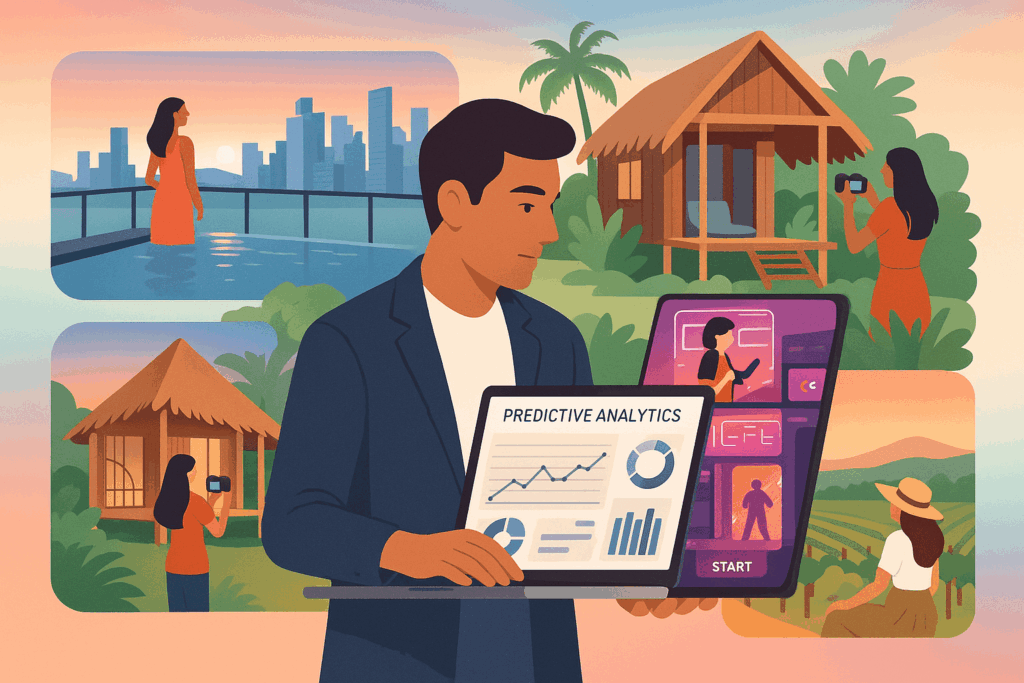
By forecasting what travelers will want tomorrow based on the data we collect today, businesses can stay ahead of trends, personalize journeys, and build ventures that thrive in the Instagram era. This article unpacks seven predictive analytics secrets that are transforming how travel businesses design, market, and deliver experiences.
1. Spotting Emerging Hashtag Trends Before They Go Viral
Social media is the heartbeat of Instagrammable travel. Predictive analytics can identify rising hashtags, photo styles, or location tags before they hit mainstream popularity.
Example: By analyzing growth in hashtags like #hiddenwaterfall or #sunsetrooftop, businesses can forecast demand for secluded nature escapes or luxury sky bars. Resorts in Bali, for instance, leveraged this approach to promote infinity pools that went viral years before the trend peaked.
Takeaway: Early detection means businesses can market the right photo spots before the competition.
2. Forecasting Seasonal Travel Behavior
Predictive models can map how travelers behave seasonally, offering insights beyond the traditional “peak” and “off-peak” calendars.
Storytelling Insight: Imagine a Mediterranean coastal town that knows Instagrammable café demand spikes in spring when flowers bloom, while yacht rentals rise in summer. With this foresight, businesses can redesign offerings—seasonal pop-up cafés, limited-time photogenic festivals, or curated rooftop events.
Benefit: Forecasting seasonality helps align marketing and experiences with natural traveler interests.
3. Personalizing Instagrammable Journeys with Data
One-size-fits-all doesn’t work anymore. Predictive analytics allows travel businesses to personalize offerings down to individual preferences.
Example: A boutique hotel may analyze guest data to predict which travelers are drawn to art murals, while others prefer panoramic rooftop shots. The hotel can then recommend personalized “Instagram trails,” ensuring each guest discovers picture-perfect corners aligned with their tastes.
Value: Personalization boosts engagement and ensures every traveler feels seen, increasing chances of organic social media exposure.
4. Anticipating Demand for Sustainable Travel Experiences
Sustainability isn’t just a buzzword—it’s an expectation. Predictive analytics can forecast demand for eco-conscious, photogenic experiences.
Case Study: An eco-resort in the Maldives used predictive models to anticipate growing interest in bamboo architecture and floating solar villas. Their early adoption not only resonated with eco-conscious travelers but also generated buzz on Instagram for its unique, sustainable aesthetic.
Lesson: Businesses that align forecasting with sustainability attract both ethically minded and social media-driven audiences.
5. Predicting Success of Influencer Collaborations
Not all influencer partnerships deliver results. Predictive analytics can help businesses identify which influencers will truly resonate with their target market.
Example: Instead of chasing the largest accounts, forecasting tools can analyze engagement rates, content styles, and audience overlaps. A local influencer with 30k followers and strong storytelling might generate more conversions than a global celebrity with millions.
Key Insight: Predictive analytics ensures partnerships feel authentic, targeted, and share-worthy.
6. Enhancing On-Site Experiences with Real-Time Data
Predictive forecasting doesn’t stop at marketing—it can enhance live experiences.
Illustration: Imagine a travel venture using real-time analytics to predict when a viewpoint will be most crowded. Guests could then receive push notifications for alternative photo spots with fewer people and better lighting. This creates a smooth, frustration-free experience that naturally leads to better Instagram posts.
Advantage: Data-driven operations turn logistics into opportunities for memorable storytelling.
7. Designing Future-Proof Travel Ventures
Perhaps the most powerful secret: predictive analytics allows businesses to design not just for today, but for the future.
Storytelling Example: A vineyard retreat in Tuscany uses predictive tools to anticipate rising demand for wine-and-wellness tourism. By integrating spa treatments with vineyard tours, they built a hybrid product that met demand before it became mainstream, turning guests into early storytellers online.
Long-Term Payoff: Travel businesses that design for the next wave of Instagrammable trends will always stay ahead of competitors.
Conclusion: The Future of Instagrammable Travel is Data-Driven
Instagrammable travel is no longer about chasing likes—it’s about creating authentic, share-worthy experiences rooted in foresight. Predictive analytics is the compass guiding travel businesses toward trends that matter, from seasonal behaviors to sustainable design and influencer collaborations.
By applying these seven secrets, entrepreneurs can craft ventures that not only look good on social media but also deliver genuine value to travelers.
Call-to-Action:
If you want your travel business to thrive in the Instagram age, start investing in predictive analytics today. The sooner you learn to forecast trends, the faster you’ll transform your venture into the next must-visit destination.
