What if your supply chain could think ahead, adapt in real time, and solve problems before they even happen? In 2025, this is no longer a futuristic fantasy. Thanks to rapid advancements in artificial intelligence (AI), businesses around the world are witnessing a major shift in how goods are moved, stored, and delivered.
The AI Revolution Is Already Here—And It’s Changing Supply Chains Forever
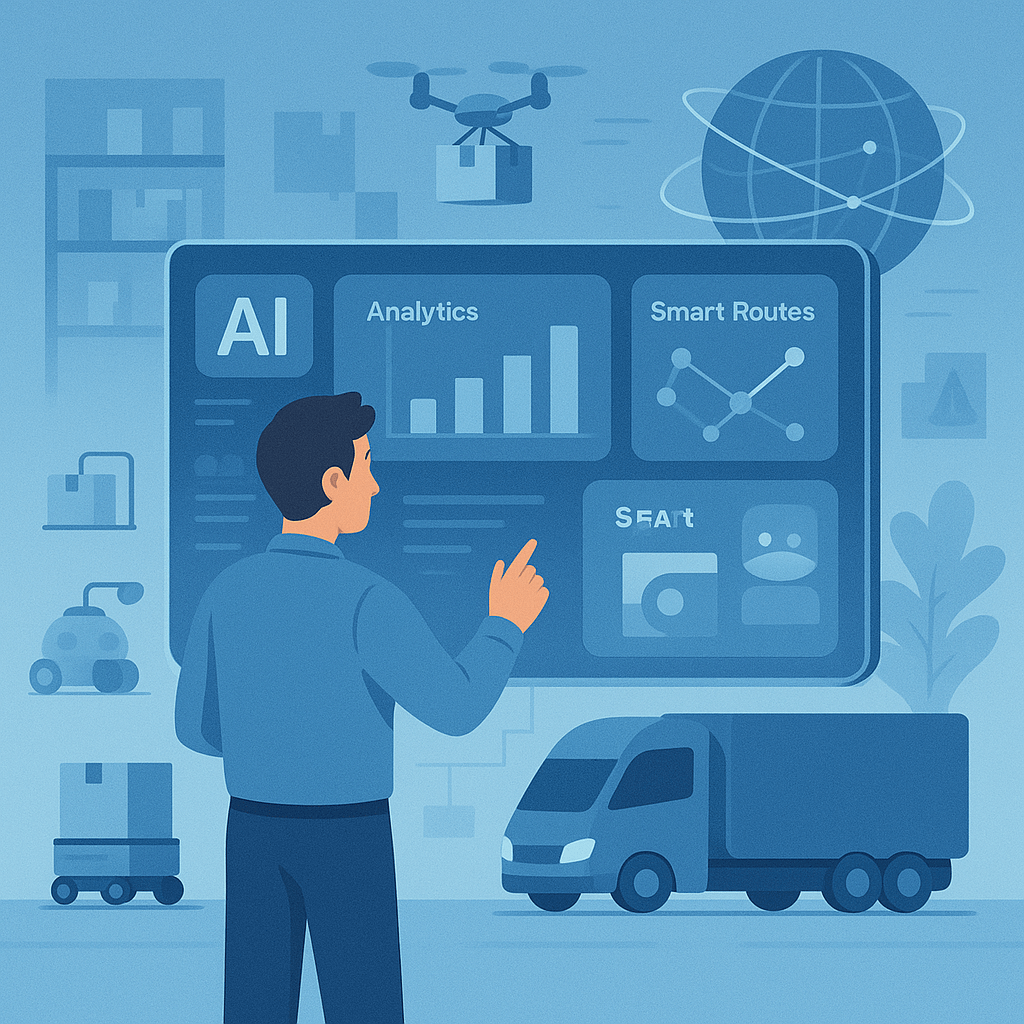
From predictive analytics to warehouse robotics, AI isn’t just a buzzword anymore—it’s a powerful force that’s reshaping logistics from the inside out. Whether you’re a startup scaling operations or a global brand managing complex logistics, understanding how AI is driving change can give you a serious competitive edge.
Let’s dive into the 7 most powerful ways AI is transforming the supply chain landscape this year.
1. Predictive Analytics for Smarter Demand Forecasting
Say goodbye to stockouts and overstock
One of the biggest pain points in supply chain management is not knowing exactly how much product you’ll need—and when. Traditional forecasting models rely on historical data, which often falls short in today’s fast-moving markets. AI-powered predictive analytics, on the other hand, combines historical trends with real-time data such as weather patterns, market shifts, social media trends, and even economic indicators.
Example:
Walmart uses AI models to predict shopping patterns during seasonal changes, allowing them to stock the right products at the right time, reducing excess inventory and lost sales.
2. AI-Powered Inventory Management
Real-time visibility, real-time decisions
Inventory mismanagement can quietly bleed your business dry. AI helps solve this by offering real-time inventory tracking using sensors, IoT, and intelligent algorithms. This gives managers live insights into stock levels, turnover rates, and demand forecasts—all from a centralized dashboard.
Use case:
Amazon’s fulfillment centers rely heavily on AI to monitor stock movement, reorder supplies automatically, and even reassign inventory based on regional demand spikes.
3. Smart Routing and Transportation Optimization
No more guesswork in delivery logistics
AI doesn’t just optimize what’s inside your warehouse—it revolutionizes how your goods travel. Machine learning algorithms analyze traffic data, weather conditions, fuel costs, and delivery windows to determine the fastest and most cost-effective routes in real time.
Storytelling angle:
A mid-sized e-commerce brand in Europe reduced fuel costs by 15% in Q1 2025 simply by using AI-based route optimization software that adjusted delivery routes daily based on live road and traffic data.
4. Automated Warehousing and Robotics
The rise of the self-operating warehouse
Gone are the days when warehouse work was 100% manual. In 2025, AI-powered robotics systems handle everything from sorting and packaging to real-time shelf restocking. These smart machines work around the clock and reduce dependency on human labor for repetitive tasks.
Example:
JD.com’s smart warehouses in China can process thousands of orders with just a handful of human workers, thanks to AI-coordinated robots and automated guided vehicles (AGVs).
5. Risk Detection and Mitigation
Preventing disasters before they happen
AI helps companies proactively detect supply chain risks—such as supplier delays, geopolitical instability, or raw material shortages—before they escalate. By monitoring thousands of data sources and using natural language processing, AI tools provide alerts and even suggest alternative sourcing options.
Case in point:
During early 2025, several manufacturers avoided production halts by using AI tools that flagged potential disruptions in Eastern European supply routes due to political unrest.
6. AI-Driven Customer Experience Enhancements
Delivering not just products, but peace of mind
Customers today expect transparency and speed. AI helps businesses keep customers informed with real-time delivery tracking, proactive delay notifications, and even chatbots for instant support.
Insight:
Companies using AI-powered customer service tools report up to 30% fewer service calls and improved satisfaction rates, according to a 2025 logistics trends report by Gartner.
7. Sustainability Optimization Through AI
Greener supply chains, smarter decisions
As sustainability becomes a global priority, AI is helping businesses minimize their environmental footprint. From route optimization (to reduce emissions) to energy-efficient warehouse operations, AI plays a key role in building greener logistics ecosystems.
Example:
UPS leverages AI to optimize delivery schedules and reduce idle times, saving millions of gallons of fuel and significantly cutting CO₂ emissions annually.
Final Thoughts: Embrace AI or Risk Falling Behind
The message is clear—AI is no longer a “nice-to-have” in supply chain and logistics. It’s the new standard. Companies that integrate AI into their operations gain not only speed and efficiency but also resilience, foresight, and customer trust.
If you haven’t started exploring how AI can benefit your logistics chain, now is the time to act. The sooner you adapt, the better your chances of staying ahead in an increasingly competitive, tech-driven world.
