Artificial intelligence is no longer confined to experimental labs or pilot projects. In 2025, enterprise AI is scaling across entire organizations, transforming how supply chains operate, how people are hired, and how money is managed.
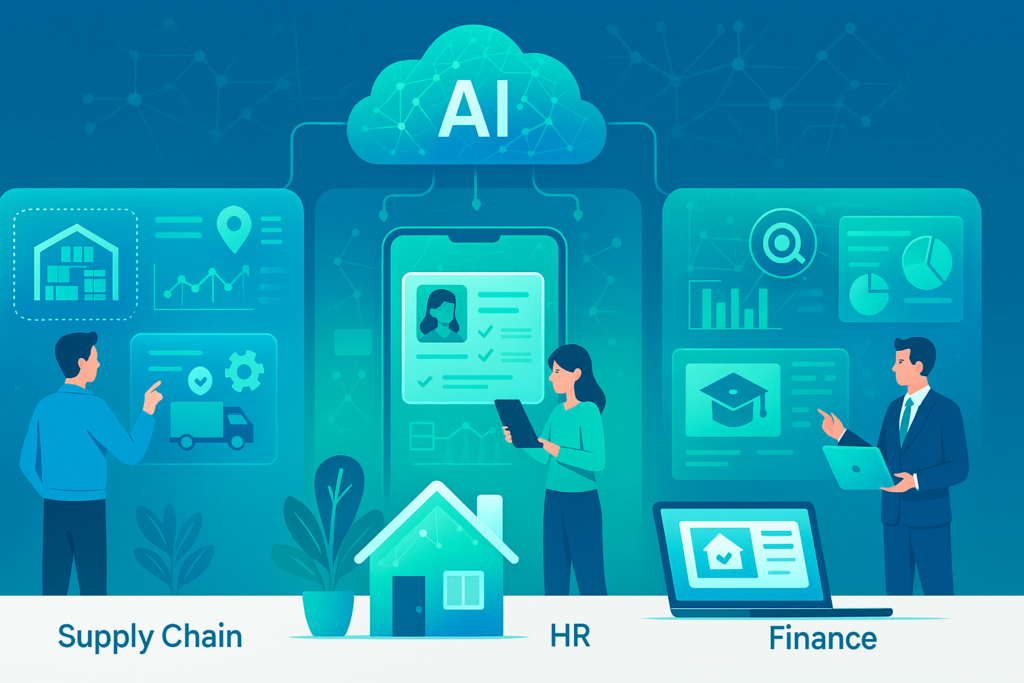
This article explores real-world, scalable AI use cases that are actively reshaping business operations in supply chain, human resources, and finance—proving that intelligent automation is now a competitive necessity.
Why Scaling AI Is the Next Competitive Edge
Forward-thinking companies are no longer using AI as isolated tools in individual departments. Instead, they are embedding AI across business functions to achieve:
- Enhanced operational efficiency
- Faster and smarter decision-making
- Reduced costs and improved ROI
- Real-time responsiveness to customers and markets
Key technologies enabling this shift include:
- Machine Learning (ML) for data-driven predictions
- Natural Language Processing (NLP) for understanding and communication
- Robotic Process Automation (RPA) for automating repetitive workflows
- Predictive analytics for forecasting and scenario modeling
AI in Supply Chain: From Forecast to Fulfillment
Predictive Demand Forecasting
AI models analyze historical sales, weather patterns, seasonality, and social media sentiment to predict future demand accurately, helping companies plan better.
Smart Inventory Management
AI-powered systems automate stock replenishment based on predictive analytics, helping avoid both overstocking and stockouts.
Logistics Optimization
AI reroutes deliveries based on real-time traffic and weather, optimizes shipment consolidation, and reduces last-mile delivery costs.
Supplier Risk Analytics
AI tools scan news, regulatory filings, and financial data to assess supplier risk and prevent potential disruptions.
AI in Human Resources: Talent Intelligence in Action
Resume Screening and Matching
AI streamlines recruitment by automatically shortlisting candidates using skill-based algorithms, reducing hiring time.
Predictive Attrition Modeling
By analyzing patterns in engagement, performance, and tenure, AI predicts which employees are likely to leave—and why.
Personalized Learning & Development
AI recommends adaptive learning paths based on employee performance data, interests, and business needs.
Bias Mitigation in Hiring
Tools like HireVue and Pymetrics analyze candidates using data-driven models to minimize unconscious bias and improve diversity.
AI in Finance: Accuracy, Speed, and Risk Reduction
Real-Time Fraud Detection
AI algorithms flag unusual patterns and detect potential fraud instantly, protecting companies from financial losses.
Automated Financial Reporting
AI generates financial summaries, real-time dashboards, and forecasts, freeing up finance teams for strategic analysis.
Credit Scoring & Lending Decisions
Modern AI models include behavioral and non-traditional data points to make more inclusive and accurate credit decisions.
Cost Analysis & Savings Optimization
AI identifies underperforming investments and suggests realignment of resources for optimal spend management.
Case Studies from Leading Companies
- Amazon uses AI to manage warehouse inventory and delivery logistics across millions of SKUs worldwide.
- Unilever deploys AI in recruitment across multiple regions, improving diversity and reducing hiring cycles.
- JPMorgan Chase uses AI for fraud detection and legal contract review, saving thousands of hours annually.
Even small and medium enterprises (SMEs) are benefiting:
- A mid-sized e-commerce business using Zoho AI reduced abandoned carts by 18% through personalized offers.
Challenges in Scaling AI
Despite its benefits, scaling AI is not without challenges:
- Data integration and quality: AI is only as good as the data it processes.
- Change management: Employees need training and clarity on how AI supports rather than replaces them.
- Ethical considerations: Explainability, data privacy, and algorithmic fairness remain crucial.
- Cost of implementation: While long-term ROI is high, initial investment in AI infrastructure can be significant.
What This Means for the Future of Work & Strategy
Companies need to reimagine:
- Roles and responsibilities: Humans work alongside AI as decision-makers and strategy enablers.
- Upskilling: Training programs must prepare employees for AI-augmented environments.
- Leadership: Executives must guide digital transformation with both technical and human perspectives.
AI is evolving from a tactical tool to a strategic partner.
Conclusion & Strategic Takeaway
Scaling AI across functions isn’t just possible—it’s already happening. Businesses that embrace intelligent automation in supply chain, HR, and finance are setting new standards for agility and innovation.
Which area of your business is ready for intelligent scale? Start by identifying high-impact, high-frequency processes—and let AI do the rest.
